For the past few years, the narrative around artificial intelligence in the workplace has focused heavily on individual productivity. Chat with a model, draft an email, summarize a PDF, or write a single block of code. While these task-level interactions delivered immediate novelty, they left a massive gap between human intent and finished enterprise output. Managing complex projects still required a human in the middle, manually copying context from one tool to another, stitching outputs together, and babysitting every phase of execution.
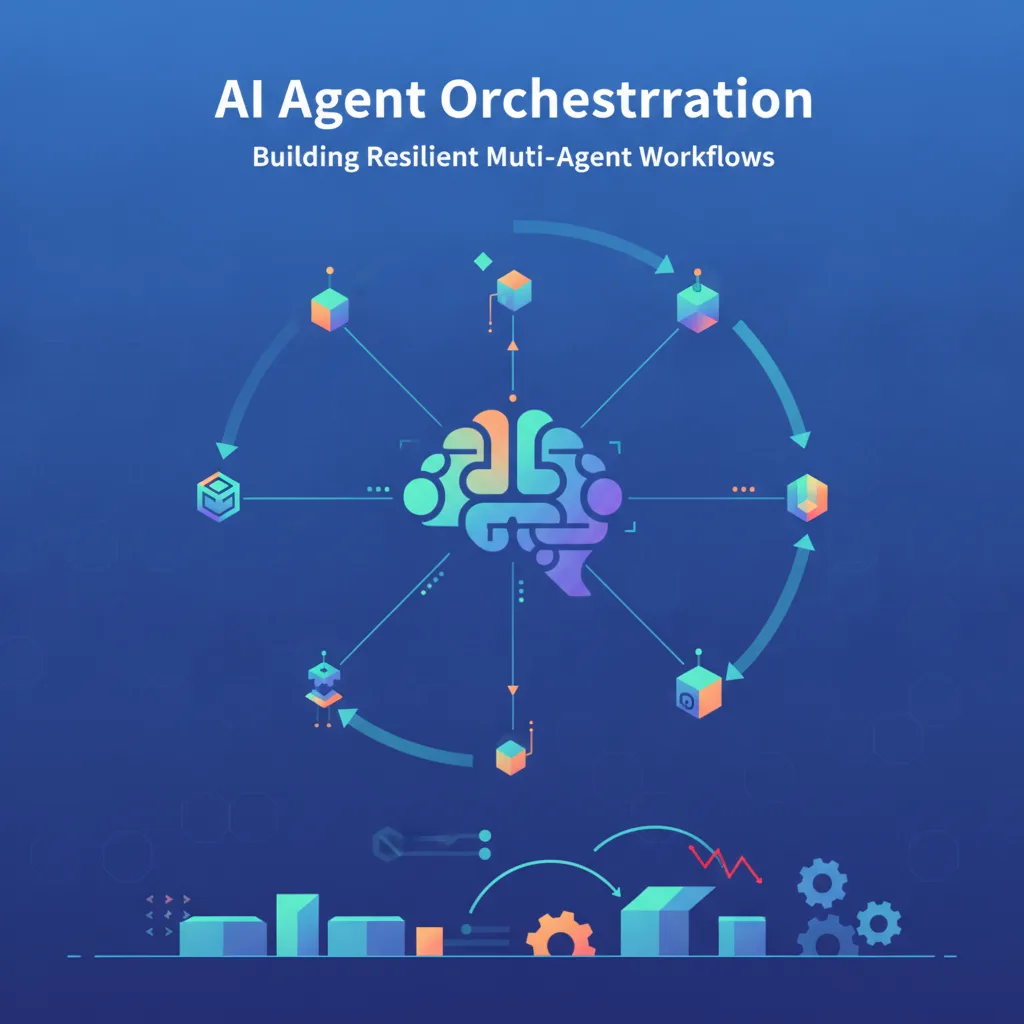
That paradigm is rapidly evaporating. We have entered the era of AI agent orchestration—a structural shift that moves automation away from rigid, linear scripts and toward dynamic, collaborative teams of autonomous models. Instead of relying on a single monolithic prompt to handle everything, modern workflows leverage specialized agents that talk to each other, delegate sub-tasks, verify each other's work, and adapt when things go wrong.
Understanding how these multi-agent systems function, and how to design them responsibly, is quickly becoming a core competency for modern developers and IT architects. Let's break down how agent orchestration is changing the way work gets done and what it takes to build systems that actually deliver.
From Rigid Scripts to Dynamic Collaboration
Traditional automation relies on deterministic workflows. If A happens, do B; if C fails, trigger an error state. While reliable for predictable, highly structured data pipelines, rigid automation breaks down the moment an unexpected edge case appears. Business logic, customer communication, and software development are inherently messy; they require judgment, context, and adaptation.
Autonomous AI agents introduce non-deterministic capability into these pipelines. An agent is essentially an LLM equipped with a goal, a defined persona or set of instructions, and a suite of tools—such as database query interfaces, API connectors, web scrapers, or code interpreters. When you connect multiple specialized agents together, you create a digital workforce capable of division of labor.
Consider a modern software deployment pipeline built on a multi-agent framework:
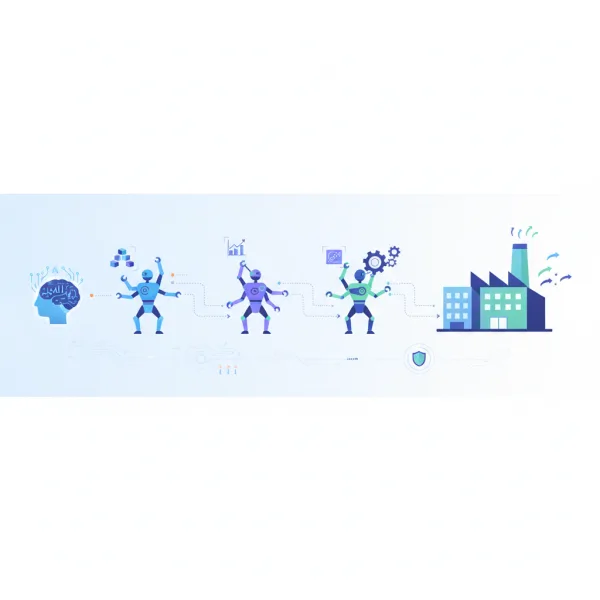
- The Architect Agent breaks down a product feature request into technical specifications and database schemas.
- The Coder Agent writes the required code blocks based on the architectural specs.
- The QA Agent reviews the generated code for security vulnerabilities, edge-case bugs, and logic flaws, sending revision requests back to the Coder if tests fail.
- The Documentation Agent updates the repository wiki and generates release notes once the QA agent grants approval.
Instead of a human manually moving artifacts between these stages, the orchestration layer coordinates the dialogue, manages shared state memory, and ensures the pipeline reaches a verified conclusion.
Core Architectural Patterns for Agent Orchestration
Building reliable multi-agent systems requires moving beyond ad-hoc prompting. Successful engineering teams rely on distinct architectural patterns to manage agent interactions and prevent costly loops or hallucination cascades.
1. The Hierarchical Manager Pattern
In this structure, a primary "Manager" or "Orchestrator" agent receives the overarching user goal. Rather than attempting to solve it directly, the manager analyzes the requirements, breaks them into distinct sub-tasks, and delegates them to specialized worker agents. The manager collects the results, verifies them against constraints, and synthesizes the final output. This pattern works exceptionally well for complex projects requiring clear chain-of-command.
2. The Peer-to-Peer Collaborative Network
Here, agents operate as a decentralized team where any agent can communicate directly with another based on context. For example, a data science agent might query a database, pass the raw dataframe to a visualization agent, which in turn flags an anomaly to an explanatory text agent. While highly flexible, peer networks require robust routing logic to prevent infinite conversational loops between agents.
3. The Adversarial Review Loop
Quality control is one of the biggest challenges in generative AI. The adversarial pattern pairs a producer agent with a critic agent. The producer generates content, code, or analysis, and the critic aggressively evaluates it against strict safety, accuracy, or stylistic guidelines. The loop continues until the critic approves the output or hits a maximum iteration ceiling. This significantly reduces downstream errors.
Key Challenges in Multi-Agent Automation
While the promise of collaborative AI agents is immense, deploying them into production environments brings unique engineering hurdles. Before building your next automated workflow, consider these critical risk factors:
- Context Window Degradation: As multi-agent conversations grow longer, models can lose track of initial instructions or early constraints. Managing concise, structured state summaries is essential.
- Runaway API Costs and Loops: Unchecked agent loops can consume thousands of tokens in seconds if two agents misunderstand each other or get stuck refining trivial details. Hard token limits and step budgets are mandatory guardrails.
- Security and Tool Permissions: Giving agents access to execution environments, file systems, or production APIs creates massive risk if a prompt injection attack tricks an agent into running malicious commands. Principle of least privilege must apply to agent toolsets.
Checklist: Best Practices for Designing Resilient Agent Pipelines
If you are designing an orchestrated workflow for your team or organization, keep these operational principles in mind:
- Define explicit boundaries: Give each agent a narrow, well-defined scope of responsibility rather than making generalist agents.
- Implement human checkpoints: Design asynchronous "approval gates" where high-impact actions—such as sending external emails, deploying code to production, or modifying financial records—require human sign-off.
- Log every interaction: Maintain immutable audit trails of inter-agent messages, tool calls, and state changes to simplify debugging when a workflow deviates.
- Test with adversarial inputs: Stress-test your orchestration logic with messy, ambiguous, or malicious prompts to observe how agents handle failure states.
- Keep models swappable: Design your orchestration framework to be model-agnostic so you can easily upgrade to more efficient or capable models as the ecosystem evolves.
The Future of Work is Collaborative
AI agent orchestration represents a profound maturation in how we utilize artificial intelligence. We are moving away from the era of isolated chat windows and entering a phase where software systems can autonomously reason, collaborate, and execute complex business logic across tools and platforms.
By treating AI models not as standalone oracles, but as specialized team members within a structured orchestration framework, organizations can unlock unprecedented levels of efficiency. Success in this new landscape belongs to those who master the architecture of collaboration—balancing the boundless potential of autonomous agents with rigorous engineering guardrails and human oversight.