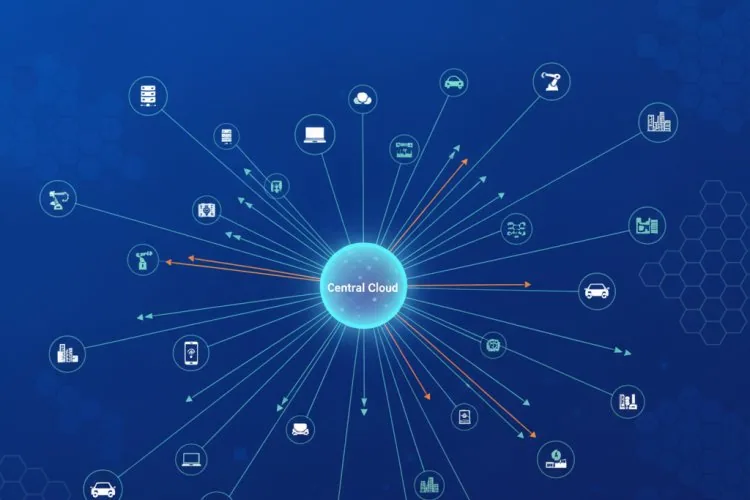
For decades, the architecture of the internet followed a predictable, centralized model. Data centers acted as massive fortresses of compute power, gathering information from users, processing it miles away, and sending the results back across sprawling fiber-optic networks. While this hub-and-spoke paradigm built the modern web, it is increasingly hitting a physical wall. As data volumes explode and latency-sensitive applications like real-time automation, advanced analytics, and immersive environments become standard, the old way of routing traffic is no longer sufficient.
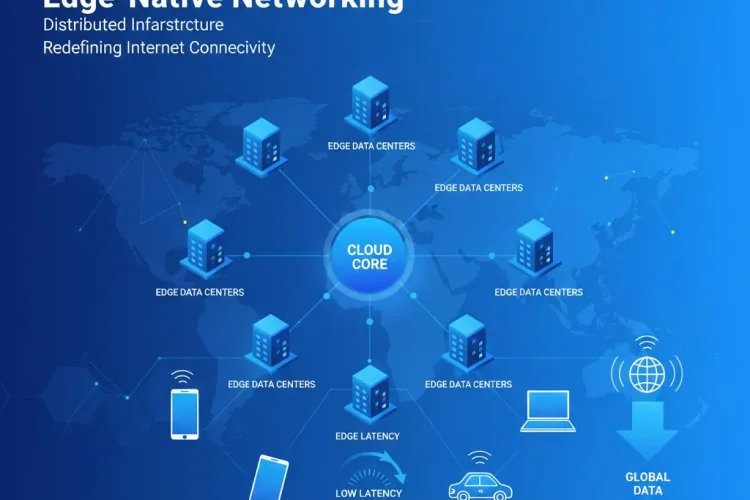
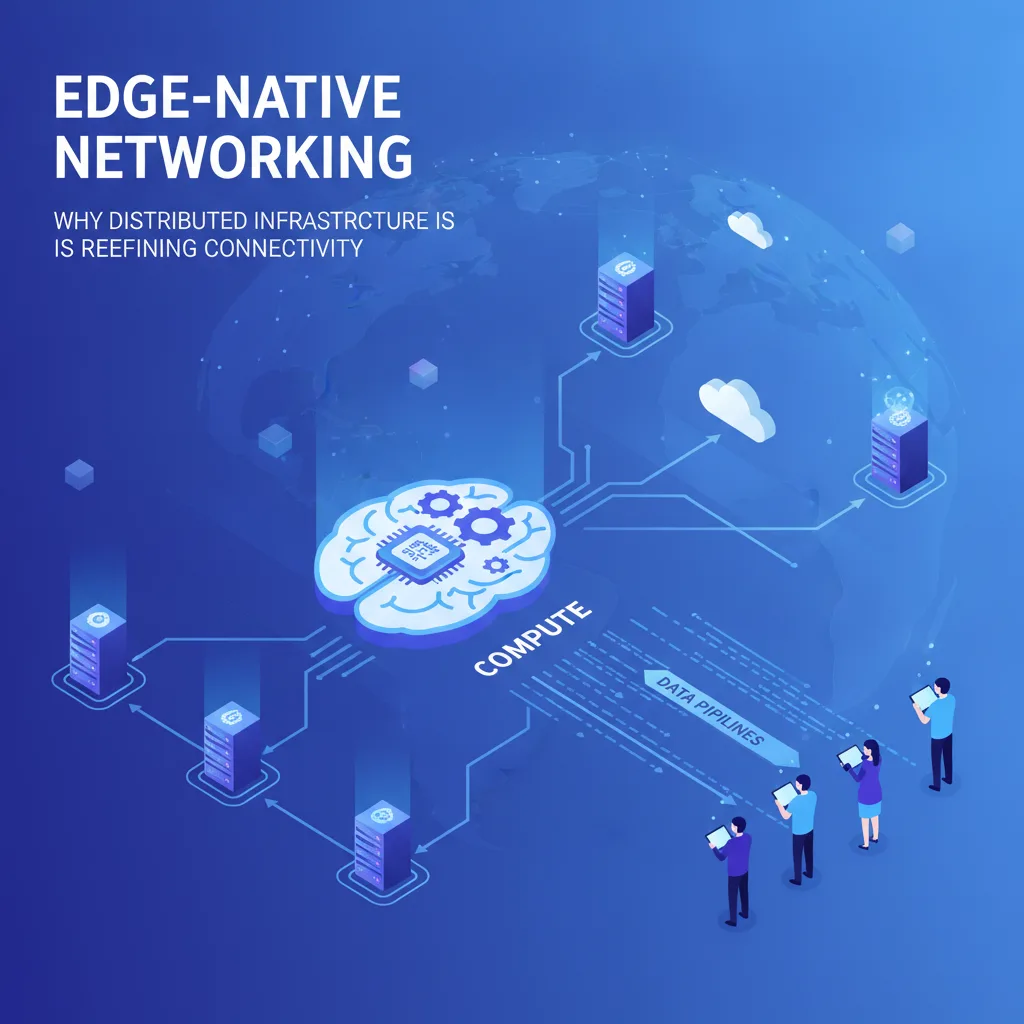
Enter edge-native networking. By shifting data processing, caching, and routing closer to where the actual data is generated and consumed, edge architecture is fundamentally redefining how we think about internet connectivity. Rather than treating the network as a mere pipe to transport data to a distant cloud core, edge-native infrastructure treats the network itself as a dynamic, distributed computing fabric.
What Is Edge-Native Networking?
To understand edge-native networking, it helps to look at what traditional content delivery and cloud setups lacked. Traditional cloud computing relies on centralized hyperscale data centers. If a user in a remote region requests a service, that packet of data might travel across dozens of network hops, introducing jitter, latency, and potential points of failure.
Edge-native networking decentralized this model entirely. It integrates computing capabilities directly into local access points, base stations, regional exchange points, and enterprise premises. Instead of hauling all traffic back to a centralized cloud, localized nodes handle routine tasks, filtering data locally and only communicating with the central core when deep, long-term processing or storage is required.
This approach relies heavily on modern network advancements, including software-defined networking (SDN), network function virtualization (NFV), and high-throughput cellular standards like advanced 5G implementations. Together, these technologies allow network operators to spin up virtual routers, firewalls, and compute instances on demand, right at the edge of the network.
Why the Shift Matters for Businesses and IT Leaders
For IT decision-makers and enterprise architects, the move toward distributed infrastructure solves several persistent bottlenecks. It is not merely an incremental speed upgrade; it is a structural shift in how digital operations are scaled.
- Ultra-Low Latency: Applications that require split-second responses—such as industrial IoT automation, autonomous systems, and high-frequency financial platforms—cannot afford the round-trip delay of traditional cloud routing. Edge networking cuts response times down to single-digit milliseconds.
- Optimized Bandwidth Costs: Hauling petabytes of raw, unprocessed telemetry data back to a central cloud gets expensive quickly. Edge nodes can aggregate, compress, and analyze data locally, transmitting only essential insights upstream.
- Enhanced Resilience: Centralized data centers represent massive single points of failure. If a regional fiber line cuts or a primary cloud zone experiences an outage, centralized systems can grind to a halt. Distributed edge networks route traffic dynamically around disruptions, keeping localized operations online.
- Data Sovereignty and Compliance: With strict global privacy regulations dictating where data can travel and be stored, edge-native architectures allow enterprises to keep sensitive user data within specific geographic or jurisdictional boundaries.
The Impact on Everyday Users and Consumer Tech
While IT professionals focus on backend architecture, everyday users feel the benefits of edge-native networking through performance and reliability. Applications feel instantaneous, high-definition streaming experiences rarely buffer, and interactive digital services respond fluidly regardless of physical distance from traditional tech hubs.
Consider the evolution of mobile and consumer tech. As devices increasingly offload heavy computational tasks to nearby edge servers—ranging from real-time language translation to complex augmented reality rendering—smartphones and IoT gadgets no longer need massive onboard silicon to perform advanced feats. The network acts as an extension of the device's own processor, creating a seamless experience powered entirely by distributed infrastructure.
Building for the Edge: A Checklist for Modern IT Teams
Transitioning toward a distributed, edge-native network model requires a strategic rethinking of existing IT workflows. Organizations looking to modernize their infrastructure should evaluate several core components:
- Audit Latency-Critical Workflows: Identify which applications or internal tools suffer most from centralized cloud latency and prioritize them for edge migration.
- Embrace Software-Defined Control: Ditch rigid hardware-bound networking gear in favor of software-defined solutions that can be provisioned, updated, and managed remotely across multiple regions.
- Prioritize Zero-Trust Security: Because distributed networks expand the attack surface by creating numerous access points, robust identity verification and end-to-end encryption must be baked into every edge node.
- Evaluate Multi-Cloud and Multi-Carrier Strategies: Avoid vendor lock-in by designing workloads that can traverse different edge providers and telecommunication carriers seamlessly.
Conclusion
The transition toward edge-native networking marks a maturing of internet architecture. As our digital ambitions grow more complex—demanding instant response times, massive data ingestion, and unyielding reliability—relying solely on centralized data centers is no longer viable. By distributing compute and connectivity to the very edges of the network, we are building a faster, more resilient internet capable of supporting the next generation of technological innovation.