For years, the promise of the cloud was simple: infinite scalability matched by pay-as-you-go flexibility. Organizations migrated workloads wholesale, spun up clusters on demand, and embraced distributed architectures. Yet, as digital estates matured into complex hybrid and multi-cloud environments, a harsh reality set in. Unchecked provisioning, opaque data transfer fees, and complex resource allocation models turned the cloud efficiency promise into a compounding financial challenge.
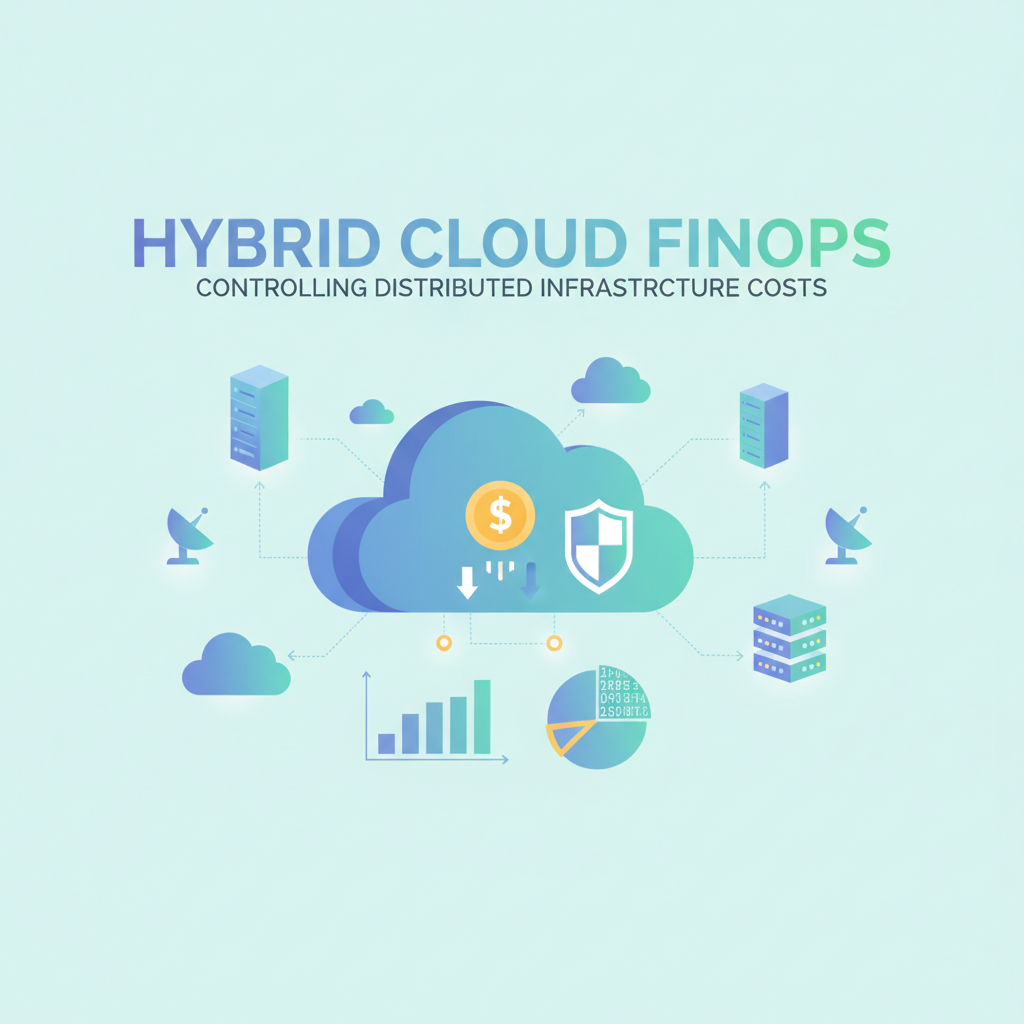
Enter the discipline of FinOps—Cloud Financial Operations. While initial FinOps adoption largely focused on taming single-provider public cloud bills, the modern challenge is significantly more intricate. Today, engineering teams manage hybrid footprints spanning on-premises data centers, edge locations, and multiple hyperscalers. To maintain financial velocity without choking innovation, organizations must evolve their cost-optimization practices into a comprehensive hybrid cloud FinOps strategy.
The Hidden Drivers of Hybrid Cloud Cost Sprawl
Managing costs across a hybrid infrastructure is fundamentally different from optimizing a single cloud environment. When workloads traverse local hardware, edge nodes, and public cloud providers, standard monitoring tools often fall short. Several distinct factors drive up expenses in distributed architectures:
- Data Egress and Transit Fees: Moving data between on-premises environments and the public cloud—or shuffling information across different cloud availability zones—can incur steep, unexpected networking charges.
- Over-Provisioning for Worst-Case Scenarios: Because latency-sensitive applications require local resilience, teams frequently over-provision on-prem hardware and edge servers while simultaneously maintaining cloud failover capacity.
- Decentralized Accountability: When development teams operate in silos across different cloud ecosystems, tracking who owns specific resource consumption becomes nearly impossible, leading to rampant shadow IT and orphan resources.
- Complex Licensing and Entitlements: Bring-your-own-license (BYOL) models and specialized enterprise agreements often fail to map cleanly onto dynamic cloud consumption metrics.
Core Pillars of Modern Hybrid FinOps
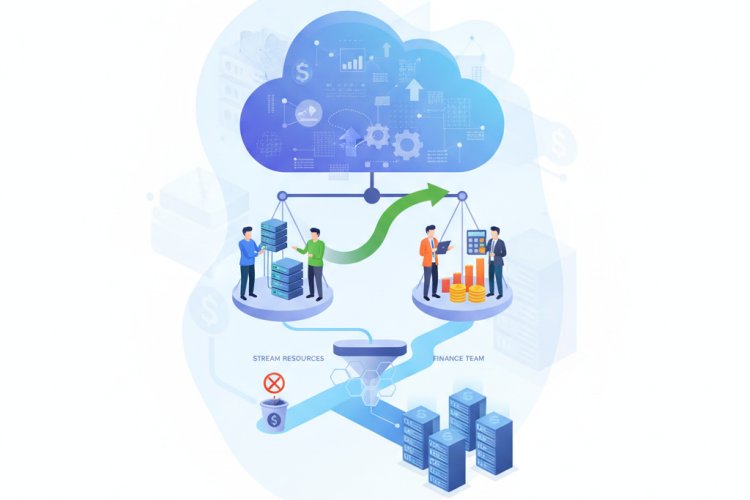
To regain control over distributed infrastructure, technology leaders must bridge the gap between finance, engineering, and operations. Cost optimization cannot be an afterthought handled exclusively by the finance department at the end of a quarter; it must be baked into the software development lifecycle.
1. Establishing Unified Observability
You cannot optimize what you cannot measure. The foundation of hybrid FinOps is a unified telemetry layer that aggregates cost, utilization, and performance metrics across every environment. By integrating native cloud provider billing APIs with on-premises hardware telemetry, engineering teams gain a single pane of glass to view total cost of ownership (TCO). This visibility allows teams to identify idle clusters, track utilization trends, and spot cost anomalies before they hit the monthly invoice.
2. Right-Sizing Workloads with Context
Traditional right-sizing focuses primarily on CPU and memory utilization within a single cloud vendor. In a hybrid architecture, right-sizing requires architectural awareness. Teams must evaluate whether a specific workload truly benefits from public cloud elasticity or if it is better suited for predictable, fixed-cost on-premises infrastructure. Conversely, batch processing and burstable workloads should be dynamically routed to public cloud spot instances or reserved capacity models designed for efficiency.
3. Optimizing Data Gravity and Egress Pathways
Data is heavy, and moving it is expensive. A mature hybrid FinOps strategy treats data placement as a primary cost driver. Architecture patterns should be designed to process data as close to its source as possible—whether that is at the edge or within a specific cloud region—minimizing cross-network transit. Caching strategies, data compression, and asynchronous synchronization can dramatically reduce the frequency and volume of costly data transfers.
A Practical Checklist for Implementing Hybrid Cloud FinOps
If your organization is looking to mature its cost-optimization practices across distributed infrastructure, use this actionable checklist to guide your roadmap:
- Form a Cross-Functional FinOps Team: Bring together representatives from software engineering, finance, procurement, and infrastructure operations to establish shared goals and KPIs.
- Implement Tagging and Allocation Standards: Enforce strict, automated tagging policies across all cloud resources and map on-premises infrastructure to specific business units or product lines.
- Audit Data Transfer Pathways: Review current inter-region and hybrid network flows to identify high-cost egress bottlenecks and redesign data pipelines accordingly.
- Automate Anomaly Detection: Set up automated alerts for unusual spikes in resource consumption or unexpected billing surges to catch misconfigurations early.
- Review Commitment Portfolios Regularly: Evaluate reserved instances, savings plans, and enterprise discount commitments quarterly to ensure they match current architectural needs rather than legacy usage patterns.
- Educate Engineering Teams: Provide developers with real-time cost feedback loops inside their CI/CD pipelines and deployment dashboards so they understand the financial impact of their code.
Building a Culture of Cost-Aware Innovation
Ultimately, successful hybrid cloud FinOps is less about restrictive budgets and more about sustainable efficiency. When engineering teams understand the cost implications of their architectural decisions, they build more resilient, streamlined, and intentional systems. By combining unified observability, smart data placement, and cross-functional collaboration, organizations can harness the full power of distributed infrastructure without letting costs spiral out of control.
As cloud environments continue to evolve toward deeper integration with edge computing and automated systems, embedding financial intelligence into infrastructure management will remain a core competency for competitive technology organizations.