
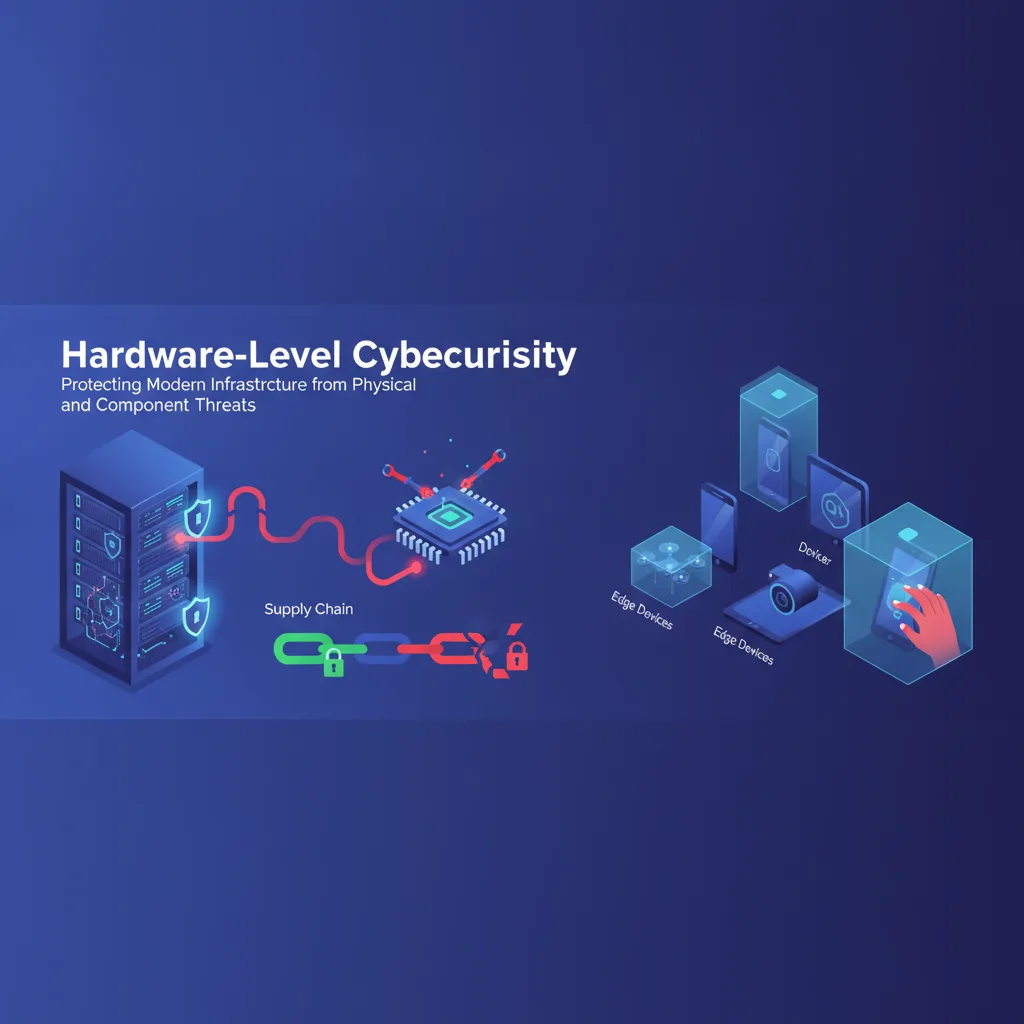
For decades, the bulk of cybersecurity conversations focused on the digital realm. Organizations built towering digital fortresses featuring multi-layered firewalls, advanced endpoint detection systems, and zero-trust software architectures. Yet, while IT teams obsess over software patches and cloud misconfigurations, a quieter, more insidious threat vector has grown increasingly prominent: the physical layer.
Hardware-level cybersecurity is no longer just a theoretical concern for intelligence agencies or specialized industrial control systems. As edge computing expands, Internet of Things (IoT) devices proliferate, and global supply chains become increasingly complex, the physical components making up our digital infrastructure represent a critical attack surface. Understanding how these vulnerabilities manifest and learning how to mitigate them is essential for modern IT decision-makers and developers alike.
The Evolution of Hardware Vulnerabilities
Traditional cybersecurity models assumed that if a device was housed in a locked server room or sealed inside an enterprise enclosure, its underlying hardware was inherently safe. Unfortunately, modern threats have completely dismantled this assumption. Hardware-level security encompasses flaws, malicious modifications, and side-channel weaknesses embedded directly into physical chips, circuit boards, and peripheral interfaces.
These vulnerabilities typically fall into a few distinct categories:
- Supply Chain Interception: Components being intercepted, modified, or swapped out during manufacturing or transit to introduce rogue microchips or firmware backdoors.
- Side-Channel Attacks: Exploiting physical phenomena—such as power consumption, electromagnetic radiation, or acoustic emissions—to extract cryptographic keys and sensitive data from processors.
- Physical Tampering and Probing: Direct interaction with circuit boards using specialized testing equipment, logic analyzers, or stereo vision rigs to map out buses, intercept unencrypted data lines, and dump flash memory.
- Compromised Firmware and Bootroms: Flaws in the foundational code that executes before the operating system even loads, allowing attackers to achieve persistent, root-level control that survives hard drive wipes and OS reinstalls.
Because these attacks target the physical or foundational layers of a system, they often bypass traditional antivirus software and operating system-level monitoring tools entirely. This invisibility makes hardware risks uniquely dangerous for enterprise networks.
Why Edge Computing and IoT Heighten the Risk
The shift toward decentralized architectures has dramatically widened the hardware threat landscape. Unlike traditional data centers—which typically feature biometric access controls, security guards, and constant video surveillance—edge devices and IoT sensors are often deployed in the wild. They sit on factory floors, hang from smart-city utility poles, or operate inside remote retail kiosks.
When physical access to a device is trivial, an attacker with basic hardware hacking tools can physically interface with debug ports, read flash memory chips directly, or insert rogue hardware implants. Once a single edge node is compromised at the hardware level, it can often serve as a secure bridge into the broader corporate network, bypassing perimeter defenses entirely.
Actionable Steps to Enhance Hardware Security
Securing infrastructure against hardware-level threats requires a paradigm shift that merges physical security protocols with traditional IT risk management. Organizations can significantly reduce their exposure by adopting a proactive, multi-layered defensive strategy.
1. Vet and Audit Your Hardware Supply Chain
Visibility is your first line of defense against compromised components. Work exclusively with trusted vendors who maintain transparent manufacturing pipelines and rigorous quality assurance standards.
- Enforce strict vendor risk assessments covering component sourcing and sub-contractor transparency.
- Utilize cryptographic verification tools and secure boot mechanisms to verify that components have not been altered in transit.
- Implement tamper-evident packaging and serial number tracking for sensitive enterprise hardware deployments.
2. Implement Secure Boot and Hardware Roots of Trust
Ensure that your devices can verify their own integrity before executing any software. A hardware root of trust—anchored in a dedicated cryptographic processor like a Trusted Platform Module (TPM) or secure enclave—provides an immutable foundation for system validation.
- Enable Secure Boot on all servers, workstations, and edge gateways to block unauthorized bootloaders and unsigned operating systems.
- Configure firmware update mechanisms to require cryptographic signatures from trusted internal authorities.
- Regularly audit firmware configurations to catch unintended persistence mechanisms or legacy debug flags left enabled by manufacturers.
3. Harden Physical Access and Interfaces
For any device deployed outside a high-security data center, physical hardening is mandatory. Treat physical accessibility as a critical severity vulnerability.
- Disable, physically remove, or seal unnecessary physical ports (such as unused USB headers, JTAG/UART debug pins, and auxiliary serial interfaces) on critical edge hardware.
- Use tamper-resistant enclosures and chassis intrusion switches that alert system administrators if a device case is opened.
- Deploy edge hardware in locked, monitored cabinets whenever possible, even in remote or semi-public locations.
4. Design for Resilience and Rapid Isolation
Assume that a hardware compromise is always a possibility. Network architecture should limit the blast radius of any single compromised physical component.
- Segment IoT and edge devices onto isolated VLANs or zero-trust network zones to prevent lateral movement.
- Implement continuous network monitoring focused on behavioral anomalies, looking for unexpected outbound traffic originating from edge nodes.
- Maintain robust hardware inventory logs so that affected devices can be rapidly located, quarantined, and replaced if a vulnerability is discovered.
Securing the Foundation of Modern Technology
As technology continues to evolve, the boundaries between physical hardware and digital software are increasingly blurred. Hackers and sophisticated threat actors understand that compromising the physical layer yields deep, persistent access that defies conventional software remediation. By acknowledging hardware-level risks and embedding physical security considerations directly into your procurement, deployment, and monitoring lifecycles, you can build a resilient infrastructure capable of standing strong against modern threats.