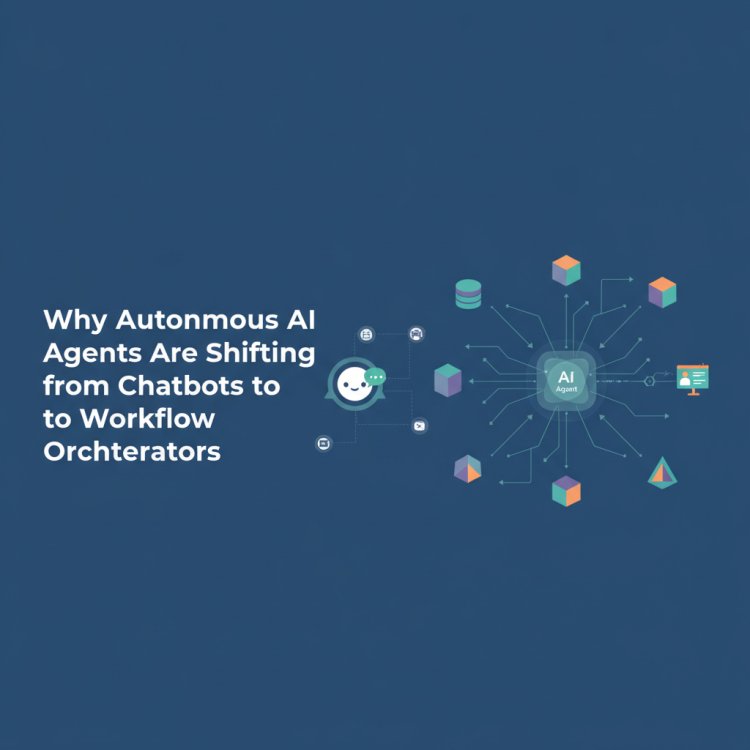
For the past few years, the mainstream narrative around artificial intelligence has been dominated by the chat interface. Whether querying a frontier language model for code snippets, summarizing lengthy documents, or drafting emails, millions of knowledge workers have grown accustomed to the back-and-forth prompt-and-response rhythm of conversational AI. But a fundamental shift is currently underway across the tech industry. We are moving away from passive assistants that simply answer questions, and marching rapidly toward autonomous AI agents designed to execute multi-step processes across disparate enterprise systems.
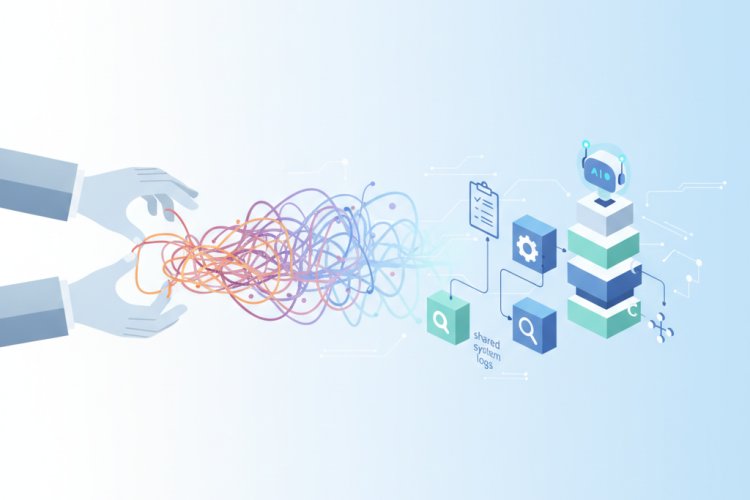
This transition marks a profound change in how work gets done. Instead of treating AI as an interactive oracle, organizations are beginning to deploy AI agents as persistent workflow orchestrators. These systems don't just generate text; they interpret high-level business goals, break them down into discrete sub-tasks, interact with external APIs, monitor their own progress, and correct errors along the way. For IT leaders, developers, and tech-curious professionals, understanding this evolution is vital for staying ahead of the curve.
From Prompt-Response to Goal-Driven Execution
The limitation of traditional conversational AI is that it requires constant human intervention. A user asks a question, gets an answer, evaluates the result, and then prompts the model again for the next step. While powerful, this loop places the cognitive burden entirely on the human operator.
Autonomous AI agents flip this dynamic by shifting the focus from how a task should be executed step-by-step to what outcome is desired. When given a complex directive—such as "audit our cloud infrastructure for unattached storage volumes, cross-reference them with last month's billing reports, and flag anomalies"—an agent doesn't just write a script. It invokes command-line tools, queries database APIs, reads the outputs, catches syntax errors, rewrites its own commands, and compiles a comprehensive report without requiring human intervention at every single junction.
This capability relies on combining large language models with deterministic execution environments, structured memory stores, and robust tool-use frameworks. The LLM acts as the reasoning engine and planner, while software scaffolding handles the secure execution of code, API calls, and data retrieval.
The Convergence of Low-Code Tooling and Agentic Frameworks
One of the most exciting aspects of this shift is how it intersects with low-code and no-code automation platforms. Historically, enterprise workflow automation relied on rigid, deterministic logic: if a webhook fires from application A, parse the payload, transform the fields, and push the data into application B using a predefined schema.
While highly reliable for structured data pipelines, these rigid workflows break down the moment an unexpected edge case appears—such as a changed API response format or unstructured customer feedback that doesn't fit neatly into predefined form fields.
Modern workflow automation platforms are increasingly integrating AI agents to bridge this gap. Rather than hardcoding every single conditional branch, developers can now embed intelligent micro-agents into visual automation pipelines. These agents can handle ambiguous inputs, interpret unstructured emails, categorize support tickets based on sentiment and intent, and route tasks intelligently. This hybrid approach pairs the predictability of traditional IT infrastructure with the cognitive flexibility of modern machine learning.
Key Architecture Pillars for Deploying Autonomous Agents
Transitioning from experimental chat applications to production-grade autonomous agents requires a completely different architectural mindset. Organizations looking to build or adopt agentic workflows must account for several critical design pillars:
- Deterministic Guardrails: Unconstrained AI can hallucinate or take unintended actions. Production systems require strict policy engines, sandboxed execution environments, and permission boundaries that limit what an agent can read, write, or delete.
- State Persistence and Memory: Long-running workflows require robust memory management. Agents need access to short-term working memory for immediate tasks and long-term vector databases to recall historical context, past user preferences, and enterprise policies.
- Observability and Logging: When an agent fails mid-workflow, debugging requires inspecting its internal reasoning chain. Comprehensive tracing tools are essential to see why an agent made a specific decision or selected a particular tool.
- Human-in-the-Loop Checkpoints: For high-stakes actions—such as executing financial transactions, modifying production infrastructure, or sending external communications—agents must be configured to pause and request human authorization before proceeding.
Checklist: Is Your Workflow Ready for Autonomous AI Agents?
Before integrating AI agents into your organization's core operations, run through this practical evaluation checklist to ensure security, stability, and success:
- Define the Scope: Are you targeting a well-defined, repetitive multi-step process with clear success metrics rather than an ambiguous open-ended task?
- Audit API Interfaces: Do the systems you want the agent to interact with have robust, well-documented, and secure APIs or command-line interfaces?
- Establish Permission Boundaries: Can you restrict the agent's credentials to the principle of least privilege, preventing unauthorized data access or system modifications?
- Implement Monitoring: Do you have logging infrastructure in place to capture every prompt, tool call, and output generated during an agent's execution cycle?
- Design Fallbacks: What happens when the agent encounters an error or a state it cannot resolve? Is there a clear path to gracefully failover or escalate to a human operator?
The Road Ahead for Workflow Automation
The evolution from static chatbots to dynamic, goal-driven workflow orchestrators represents a maturing phase in enterprise technology adoption. As these tools become more reliable, secure, and deeply integrated into everyday software ecosystems, the nature of knowledge work will continue to shift. Instead of spending hours manually moving data between tabs, writing boilerplate scripts, or coordinating cross-platform tasks, professionals will increasingly act as directors and supervisors of autonomous digital workforces.
Navigating this transition successfully requires looking past the hype of conversational interfaces and focusing on the unglamorous engineering foundations of security, observability, and structured tooling. By building robust guardrails and treating agents as accountable software components rather than magic solutions, organizations can unlock unprecedented levels of efficiency and scale.