Cloud computing has fundamentally transformed how organizations build, scale, and deliver software. By abstracting away physical hardware, the cloud gives engineering teams the agility to spin up thousands of compute nodes or deploy global databases in seconds. However, that very same elasticity introduces a silent operational hazard: runaway cloud bills.
When provisioning infrastructure is as easy as executing a few lines of code or clicking a button in a console, waste naturally accumulates. Orphaned storage volumes, over-provisioned virtual machines, and unoptimized data transfer paths can slowly bleed an engineering budget dry. This realization has shifted cloud financial management from a backend accounting chore into a core engineering discipline known as FinOps.
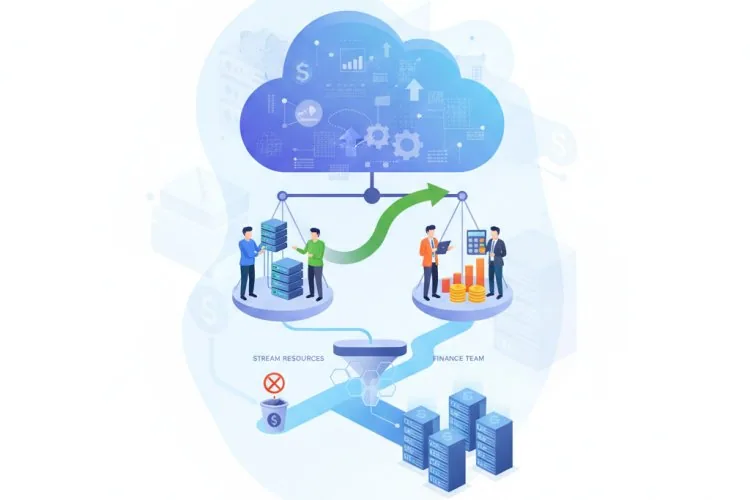
Achieving sustainable cloud cost optimization requires more than just reactive monthly auditing. It demands architectural awareness, automated governance, and cultural alignment between the engineers who write the code and the finance teams who fund the infrastructure.
Understanding the Root Causes of Cloud Waste
Before implementing cost reduction strategies, it helps to understand why cloud bills tend to balloon in the first place. Unlike traditional on-premises data centers—where capacity is constrained by physical hardware purchases and capital expenditure cycles—the cloud operates on an operational expenditure model.
This flexibility often leads to three common anti-patterns in modern cloud architecture:
- Over-Provisioning "Just in Case": Engineers frequently select larger instance types than necessary out of an abundance of caution, ensuring that peak loads never cause a bottleneck. Unfortunately, these resources often run at single-digit CPU utilization rates 95% of the time.
- Forgotten Non-Production Resources: Development, staging, and testing environments are routinely spun up for active projects but left running 24/7 long after active work has paused, consuming valuable compute hours over weekends and holidays.
- Unmonitored Data Transfer Costs: Many teams focus heavily on compute and storage line items while ignoring the hidden expenses of cross-region traffic, NAT gateways, and egress data moving out of cloud provider networks.
Core Pillars of Modern Cloud Cost Optimization
Effective optimization is not about cutting corners or starving applications of necessary resources; it is about maximizing business value per dollar spent. Modern organizations typically structure their optimization efforts around several key technical vectors.
1. Right-Sizing Compute and Storage
Right-sizing is the foundational step of any cloud cost reduction initiative. It involves matching the capacity of your cloud resources to the actual performance metrics and utilization patterns of your applications.
Instead of relying on guesswork, teams should leverage cloud provider monitoring tools and application performance monitoring (APM) telemetry to analyze CPU, memory, disk, and network utilization over a rolling 30-day window. If an application consistently uses less than 20% of its allocated memory and CPU, stepping down to a smaller instance family or a more cost-effective processor architecture can yield immediate savings without performance degradation.
2. Embracing Commitment-Based Discounts Intelligently
Major cloud providers offer significant discounts—often ranging from 30% to over 60%—in exchange for long-term capacity commitments, such as one-to-three-year savings plans or reserved instances.
However, committing blindly to static instance families can backfire if your engineering team is actively refactoring applications into serverless architectures or containerized microservices. A sound FinOps strategy balances reserved capacity for predictable, baseline workloads while leaving enough elasticity to handle variable scaling through on-demand or spot instances.
3. Automating Resource Lifecycles
Manual clean-up is rarely effective at scale. To prevent waste from accumulating, organizations must bake automation into their infrastructure pipelines.
Consider implementing the following automated policies:
- Scheduled power-downs for non-production environments during non-working hours and weekends.
- Automated tagging policies that require every resource to carry metadata indicating its owner, department, and project, enabling accurate chargeback and showback reporting.
- Lifecycle rules that automatically transition infrequently accessed object storage to cheaper archival tiers or delete temporary build artifacts after a set retention period.
Building a Culture of FinOps and Accountability
Tools and automation scripts can only take you so far. The most successful cloud cost optimization programs treat cost as a first-class architectural metric, right alongside latency, throughput, and availability.
When developers have real-time visibility into the financial impact of their architectural decisions—such as seeing the cost per query of a database or the hourly expense of a testing cluster—they naturally write more efficient code. Bridging the gap between engineering and finance ensures that cloud expenditure scales proportionally with business growth and revenue, rather than outpacing it.
By treating infrastructure spend as an engineering problem that requires continuous measurement and refinement, organizations can build resilient, high-performance cloud environments that deliver maximum value without breaking the bank.