For decades, the golden rule of modern networking was simple: capture data at the edge, haul it across vast fiber-optic links to a centralized cloud datacenter, process it using heavy compute resources, and send the results back. While this hub-and-spoke model successfully powered the initial expansion of the internet, it is increasingly running into physical and economic roadblocks. As data volumes explode—driven by billions of connected IoT devices, high-resolution sensor arrays, and resource-intensive local intelligence models—hauling every single byte to a distant server is no longer sustainable.
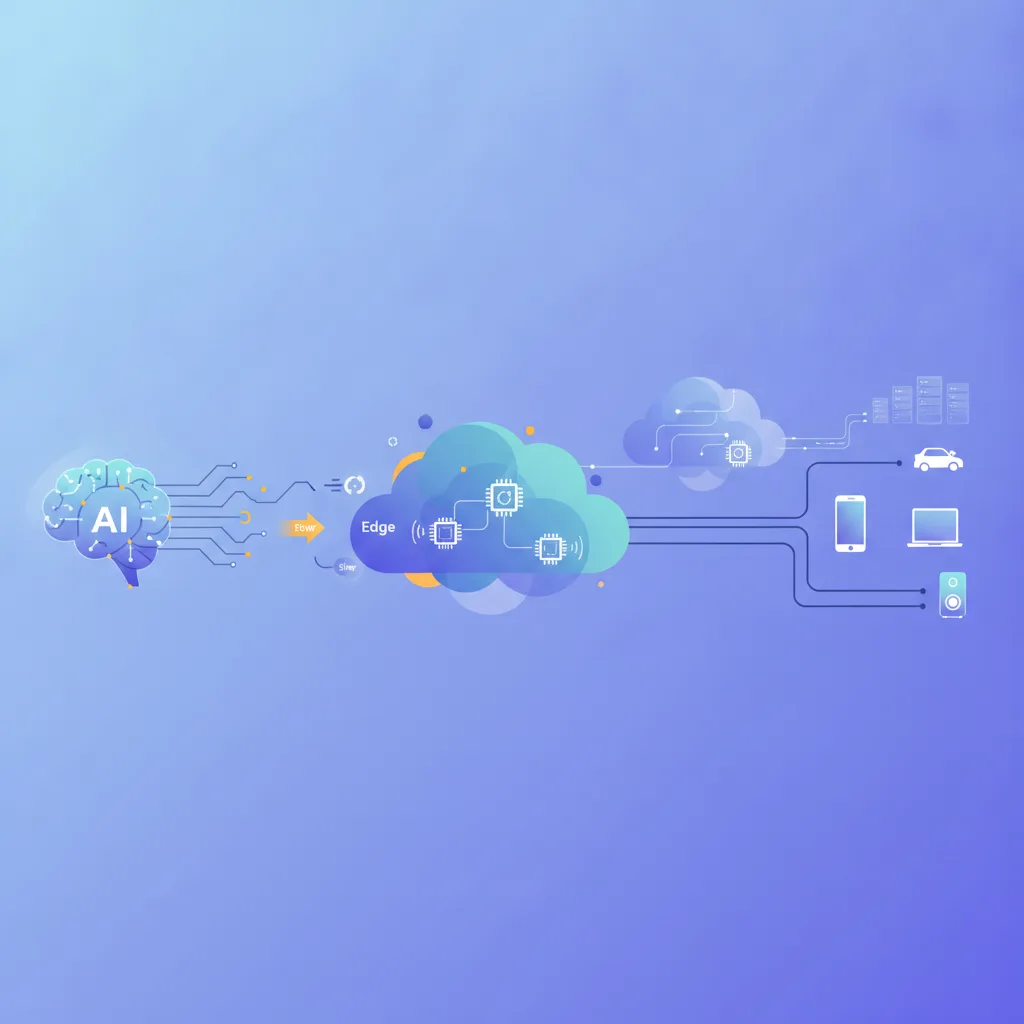
Enter edge AI networking: a structural evolution in how we think about bandwidth, compute, and latency. By pushing intelligence directly to the network periphery—closer to where data is actually generated—organizations are fundamentally altering their approach to connectivity. This shift is not just a hardware upgrade; it is a complete architectural rethink that impacts everyone from enterprise IT decision-makers to everyday technology consumers.
The Bottlenecks of Traditional Centralized Networking
To understand why edge AI networking is gaining momentum, we have to look closely at the limitations of legacy architectures. Traditional wide-area networks (WANs) rely heavily on continuous backhauling. Every security camera feed, industrial IoT sensor reading, and autonomous vehicle telemetry log must travel upstream through local routers, across regional backbones, and into a hyperscale cloud facility.
This approach introduces three primary friction points:
- Latency: The speed of light in fiber places a hard physical floor on transmission times. For real-time applications like industrial automation, autonomous driving, or high-frequency trading, even a 50-millisecond delay can spell disaster.
- Bandwidth Saturation: Streaming raw, high-definition data streams continuously from thousands of endpoints quickly exhausts available network capacity, driving up transit costs and risking packet loss.
- Resiliency Risks: If a local node loses its upstream connection to the cloud datacenter, a purely cloud-dependent system becomes blind and unresponsive, exposing critical infrastructure to downtime.
By moving AI workloads directly into edge gateways, routers, and local access points, engineers can filter, analyze, and act on data locally. Only aggregated insights or critical anomalies need to be sent back to the core cloud, dramatically cutting down traffic volume and response times.
How Edge AI and 5G/6G Converge
The rise of high-speed wireless connectivity has played a crucial role in enabling edge architectures. Modern 5G networks—and the foundational research currently laying the groundwork for 6G—are designed specifically with distributed computing in mind. Features like ultra-reliable low-latency communication (URLLC) and network slicing allow telecom operators to guarantee specific performance parameters for edge workloads.
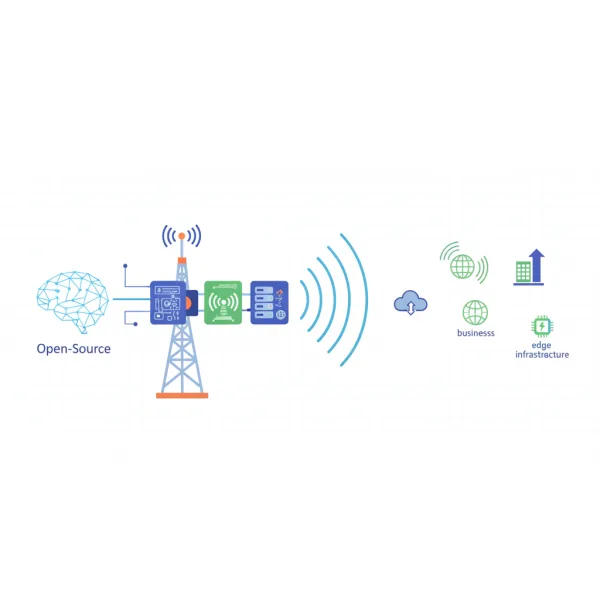
Instead of treating the cellular network as a dumb pipe that merely shuttles packets from point A to point B, modern edge networks integrate computing fabric directly into cell towers and local switching centers (Multi-Access Edge Computing, or MEC). This means an enterprise can deploy localized machine learning models right at the doorstep of their physical operations, leveraging local wireless links that bypass the congested public internet entirely.
Key Benefits for Enterprises and Everyday Users
The transformation toward edge-native networking yields tangible advantages across multiple sectors:
1. Radical Reduction in Latency
When inference happens locally—whether inside a smart router at home or a hardened gateway on a factory floor—decision-making drops from hundreds of milliseconds to single-digit milliseconds. This makes real-time computer vision, immediate threat detection, and interactive remote control genuinely viable.
2. Enhanced Data Privacy and Security
Sending raw personal, financial, or proprietary corporate data across public network lines introduces numerous attack vectors. Edge AI networking minimizes exposure by processing sensitive data locally. Only anonymized metadata or encrypted summaries leave the local perimeter, significantly shrinking the corporate attack surface and simplifying compliance with strict data residency regulations.
3. Optimized Bandwidth and Lower Infrastructure Costs
By filtering out redundant information at the source, edge nodes prevent network congestion. For businesses operating remote sites with expensive satellite or metered cellular links, local filtering translates into massive recurring savings on transit costs.
Implementing Edge AI Networking: A Strategic Checklist
Transitioning from a centralized cloud model to a distributed edge architecture requires careful planning. IT leaders and network architects should evaluate the following steps when modernizing their infrastructure:
- Audit Data Flows: Map out exactly what data is being generated across your organization, where it needs to go, and what tolerance exists for latency and packet loss.
- Assess Compute at the Edge: Determine whether existing routers, switches, and gateways have the necessary hardware accelerators (such as NPUs or lightweight GPUs) to handle local AI model execution.
- Prioritize Resiliency: Design your edge nodes to operate in an offline-first mode. Ensure that local devices can function autonomously even if the primary backhaul network experiences an outage.
- Establish Centralized Management: While processing happens locally, managing hundreds or thousands of distributed edge devices requires robust orchestration platforms to push security patches, model updates, and configuration changes efficiently.
- Review Security Boundaries: Treat the edge as a hardened zone. Implement zero-trust access controls, secure boot protocols, and encrypted local storage to protect physical hardware deployed in unsecured locations.
Looking Ahead: The Future of Distributed Connectivity
As silicon manufacturers continue to produce highly efficient, low-power processors capable of running sophisticated machine learning models at the edge, the boundary between networking equipment and computing infrastructure will continue to blur. Routers will no longer just route packets; they will reason about them, optimize them, and secure them in real-time.
For organizations and individuals alike, this shift promises a faster, more resilient, and inherently more private digital experience. By keeping data processing where it belongs—close to the user and close to the physical world—edge AI networking is setting a new standard for how the connected world operates.