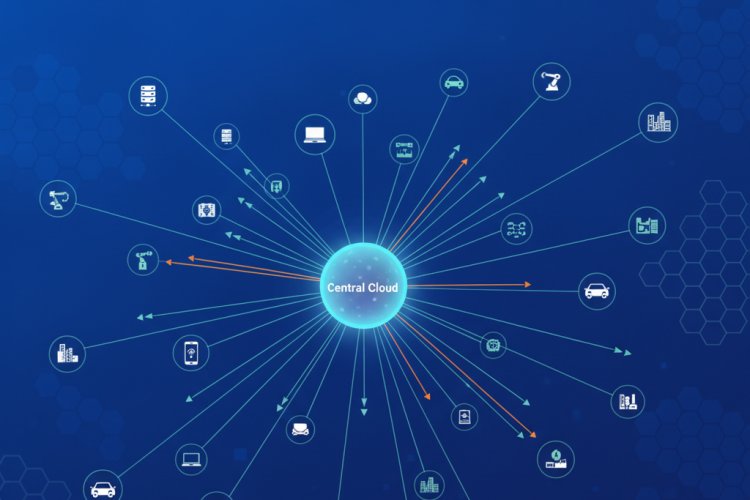
For decades, the architecture of the internet followed a predictable, centralized path. Data lived in massive data centers, users made requests from their devices, and packets traveled across vast distances, bouncing through a complex web of routers and backbones to deliver content. While this hub-and-spoke model successfully scaled the early web, it is rapidly hitting its physical limits. Today’s applications—driven by real-time collaboration tools, high-frequency data streaming, and autonomous systems—demand a fundamentally different approach.
Enter edge-native networking. By shifting compute, storage, and routing logic closer to where data is actually generated and consumed, modern network architects are rewriting the rules of connectivity. This shift is no longer just a theoretical optimization for content delivery networks; it is becoming the core blueprint for enterprise IT infrastructure, changing how both everyday users and large organizations experience the web.
The Bottlenecks of Traditional Centralization
To understand why edge networking is gaining momentum, we first need to look at what is breaking down in traditional cloud models. The speed of light is a stubborn physical constant. When a user in Tokyo requests data from a server in Virginia, that packet has to travel thousands of miles through undersea cables and terrestrial fiber networks. Even with the fastest fiber-optic links, propagation delay introduces milliseconds of latency.
While a few milliseconds might sound negligible, they accumulate rapidly:
- Interactive Applications: Real-time video conferencing, collaborative workspace tools, and remote desktop environments suffer from jitter and lag when packets must traverse multiple continents.
- Data Volume Strain: Sending every byte of raw telemetry, IoT sensor output, and video feed back to a centralized cloud data center saturates enterprise bandwidth and increases transit costs.
- Reliability and Single Points of Failure: If a primary cloud region experiences an outage or a major fiber line is cut, centralized architectures can leave entire regions disconnected or crippled.
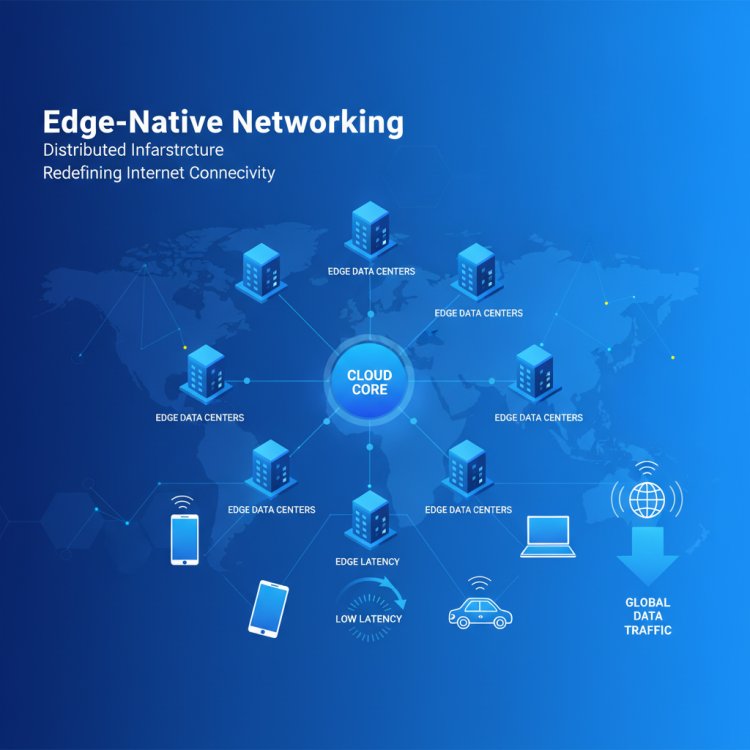
Distributed infrastructure solves these challenges by decentralizing the network fabric. Instead of pushing everything back to the mother ship, edge nodes distributed across metropolitan areas process, filter, and route data locally.
What Makes Infrastructure "Edge-Native"?
True edge-native networking goes beyond simply caching static web pages closer to users. It involves embedding compute capabilities directly into the routing layer. In an edge-native paradigm, network hardware and software are designed to execute lightweight code, manage state locally, and make intelligent routing decisions at the periphery of the network.
This convergence of networking and compute introduces several architectural advantages:
- Sub-10ms Latency Windows: By placing compute nodes within local peering distance of end users, applications can respond almost instantaneously.
- Optimized Bandwidth Consumption: Data is aggregated, filtered, and compressed at the edge, meaning only relevant, high-value payloads are sent back to core data centers.
- Autonomous Local Resiliency: Edge nodes can often maintain core operational loops even if their connection to the wider internet is temporarily degraded or severed.
Implications for Businesses and IT Decision-Makers
For organizations planning their infrastructure roadmap, the transition toward edge-native networking requires a shift in how applications are designed and deployed. It is no longer enough to build an app and simply deploy it to a single cloud region. Modern distributed systems require workload portability and intelligent traffic orchestration.
Here are key strategic considerations for IT leaders evaluating edge connectivity solutions:
- Audit Your Latency Sensitivity: Map out which components of your software stack actually require real-time responsiveness. User-facing authentication, API gateways, and real-time data ingestion are prime candidates for edge migration.
- Reevaluate Data Governance and Compliance: Local processing can help organizations comply with strict regional data residency laws by keeping sensitive user data within specific geographic boundaries.
- Adopt Containerized and Lightweight Runtimes: Edge environments operate under tighter resource constraints than massive cloud hypervisors. Containers and modular execution environments ensure workloads can spin up rapidly across distributed points of presence.
- Integrate with Existing Multi-Cloud Strategies: Edge networking should complement, not replace, your core cloud architecture. Ensure your networking vendors offer seamless bridging between your legacy environments and distributed edge nodes.
Looking Ahead: The Convergence of Edge and Next-Gen Connectivity
As telecommunications providers continue rolling out advanced 5G standalone networks and laying the groundwork for eventual 6G standards, the synergy between wireless connectivity and edge-native infrastructure will only tighten. Ultra-reliable low-latency communication (URLLC) combined with distributed edge nodes will unlock entirely new categories of connected experiences—from smart city traffic management systems to industrial automation networks that operate with zero human intervention.
The transition to a distributed internet is well underway. For developers, IT architects, and forward-thinking businesses, embracing edge-native networking is no longer an optional upgrade; it is the foundation upon which the next generation of resilient, high-performance digital services will be built.