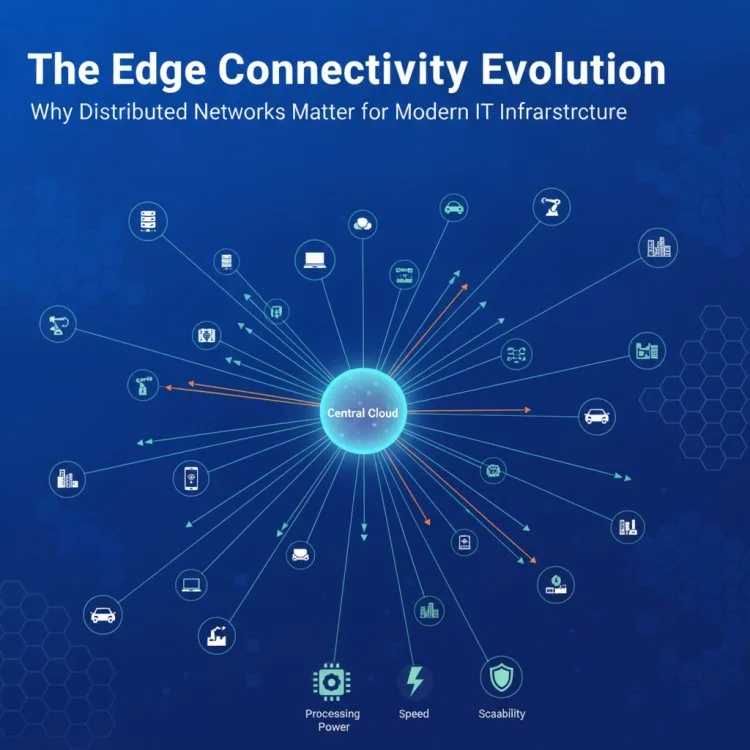
For decades, the golden rule of enterprise networking was simple: centralize everything. Data flowed from remote offices and local users back to massive, centralized data centers or hyperscale cloud regions, where heavy compute engines processed the information before sending it back. While this hub-and-spoke model served the internet well through the era of desktop computing and early web apps, it is rapidly hitting a physical wall.
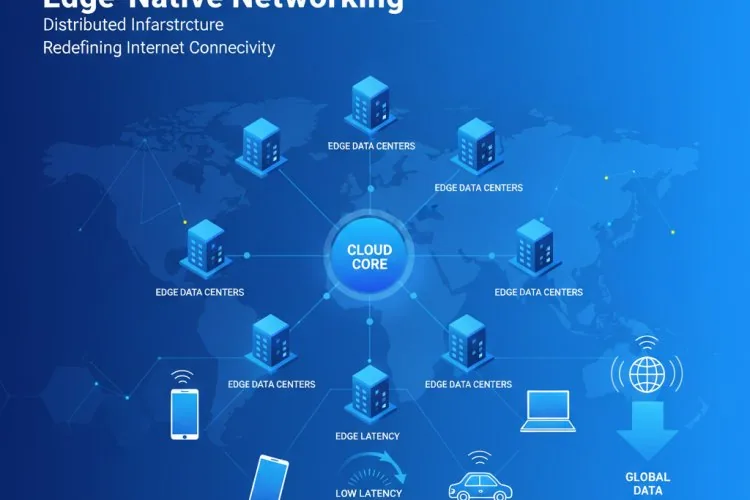
Today, the explosion of real-time data, autonomous systems, and latency-sensitive applications requires a fundamental reimagining of how traffic moves. Enter the modern era of edge connectivity and distributed network architectures. By moving computing power and network intelligence closer to where data is actually created—whether that is a smart factory floor, a delivery drone, or a local retail kiosk—organizations are cutting down transit times and redefining what is possible in digital infrastructure.
What Is Driving the Shift Toward Edge Connectivity?
The movement away from purely centralized architectures is not a passing trend; it is a structural necessity driven by shifting technical requirements. Several compounding factors are forcing IT decision-makers to rethink their connectivity strategies:
- The Latency Threshold: Human perception, industrial automation, and real-time AI inference demand response times measured in single-digit milliseconds. Round-trips to a distant cloud region simply introduce too much delay.
- Bandwidth Economics: Backhauling raw sensor data, high-definition video feeds, and continuous telemetry logs to a central cloud is prohibitively expensive and strains wide-area network (WAN) links.
- Resiliency and Offline Capabilities: Edge nodes allow critical operations to continue uninterrupted even if the primary internet backhaul experiences temporary degradation or complete failure.
- Data Sovereignty and Privacy: Processing sensitive user or industrial data locally helps organizations comply with stringent regional data protection regulations by keeping information within geographic boundaries.
Core Components of a Modern Distributed Network
Building an effective edge-to-core network strategy requires more than just dropping a server into a remote closet. It demands a holistic approach that integrates hardware, software-defined networking (SDN), and intelligent orchestration.
1. Software-Defined Perimeter (SDP) and Zero-Trust at the Edge
Traditional perimeter security relied on securing a corporate headquarters or a data center. In a distributed edge environment, every node, device, and gateway is a potential attack surface. Modern edge connectivity relies heavily on zero-trust network access (ZTNA) principles, ensuring that authentication and authorization happen dynamically at the network edge rather than relying on a static VPN tunnel.
2. Multi-Access Edge Computing (MEC)
Telecommunications providers and enterprise architects are increasingly leaning into MEC to place compute and storage resources directly within cellular base stations or local exchange points. This allows mobile devices, IoT sensors, and field workers to tap into low-latency processing without building heavy localized infrastructure from scratch.
3. Intelligent Traffic Steering
Distributed networks utilize advanced routing algorithms that constantly evaluate network conditions across multiple paths—such as 5G, fiber, and satellite—to dynamically steer traffic based on cost, performance requirements, and security policies.
Actionable Steps for IT Leaders Implementing Edge Networks
Transitioning from a centralized model to a distributed edge architecture requires careful planning. If your organization is evaluating its network topology for the coming years, consider the following roadmap:
- Audit Your Latency and Bandwidth Bottlenecks: Identify which applications or workloads suffer the most from centralized processing. Look for use cases where local data filtering or caching could dramatically reduce WAN costs.
- Define a Consistent Security Policy: Ensure that your security tooling can scale to remote locations without requiring manual configuration by on-site staff. Zero-trust frameworks should be baked into your edge deployment from day one.
- Prioritize Automation and Zero-Touch Provisioning (ZTP): When managing hundreds or thousands of edge locations, physical IT support is rarely feasible. Invest in provisioning tools that allow devices to configure and update themselves securely out of the box.
- Evaluate Hybrid Connectivity Options: Do not rely on a single carrier or medium. Build redundancy by combining enterprise-grade fiber with resilient wireless backups like private or public 5G.
Looking Ahead: The Convergence of Edge and AI
The urgency behind modernizing network connectivity is amplified by the rapid adoption of localized artificial intelligence. As smaller, highly efficient machine learning models become capable of running directly on edge hardware—from retail point-of-sale terminals to industrial robotics—the relationship between networking and compute is merging entirely. Networks are no longer just pipelines for moving bytes from point A to point B; they are active, intelligent fabrics that participate in decision-making.
For IT professionals, developers, and technology leaders, mastering this shift is essential. Those who embrace distributed, resilient, and intelligent edge architectures will unlock unprecedented operational agility, while those anchored to legacy centralized models risk being left behind in a fast-paced, real-time digital economy.
More about edge connectivity
Want to go further with edge connectivity? These Netstech guides and services are a good next step: