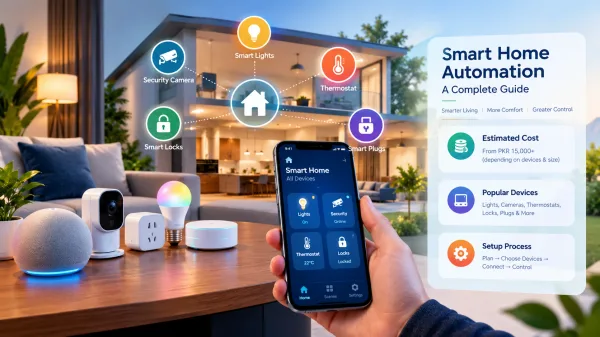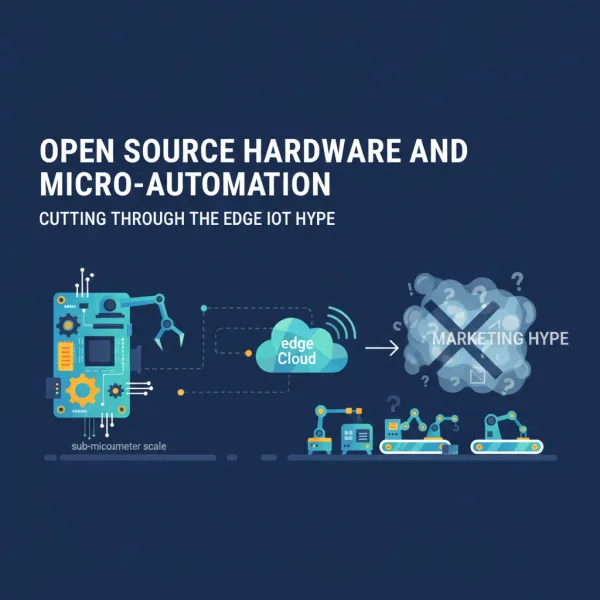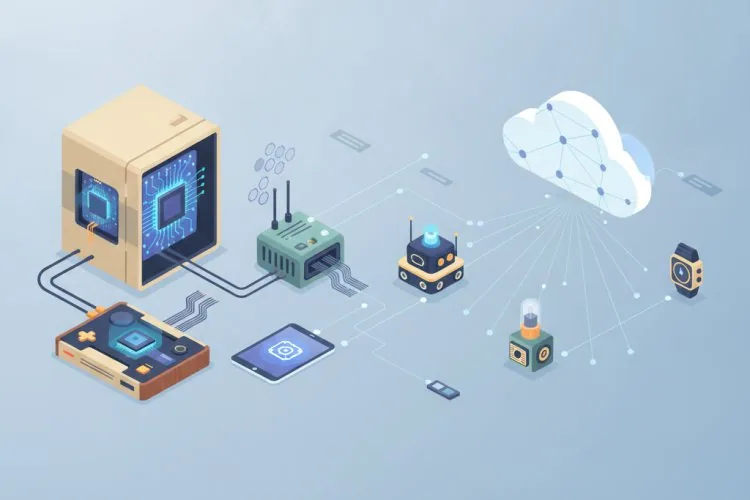
For the better part of a decade, the narrative surrounding the smart home has followed a predictable, cloud-tethered script. You buy a connected bulb, a smart lock, or a thermostat, connect it to your Wi-Fi, and trust that a distant corporate server will orchestrate your daily routines. If your internet drops out, your home suddenly becomes considerably less "smart." If a cloud provider suffers an outage, your lights might refuse to turn on.
Lately, however, a meaningful shift has been taking place across the consumer and prosumer IoT landscape. A growing movement toward local-first smart homes is challenging the default cloud-dependent architecture. But as hardware manufacturers race to slap labels like "edge-ready" and "local processing" onto their latest boxes, it is easy to get lost in the marketing noise. Separating genuine architectural progress from mere buzzwords requires a closer look at how modern connected hardware actually communicates, processes data, and handles security.
Understanding the Local-First Architecture
To understand what is genuinely new in the IoT space, we first need to look at traditional smart home designs. Most early consumer hardware relies entirely on the cloud. When you press a button on your phone or issue a voice command, that signal travels from your device, out to your router, up to a public cloud server, gets processed, and then travels all the way back down to your smart plug. This round trip introduces latency, increases bandwidth consumption, and creates an ongoing reliance on external infrastructure.
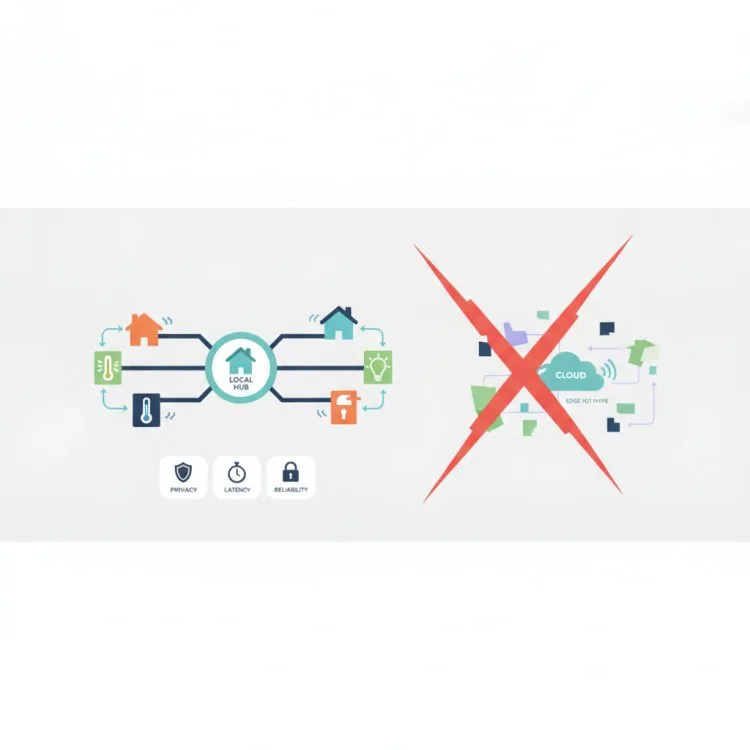
Local-first IoT shifts the point of execution directly into your physical living space. Instead of relying on a remote data center to determine that a motion sensor has triggered a hallway light, a local hub sitting in your utility closet processes the event within milliseconds over your local area network (LAN). Devices communicate using local protocols—such as Zigbee, Z-Wave, Thread, and Matter—which operate independently of your broader internet connection.
This does not mean your home is entirely disconnected from the outside world. Remote access is still possible, but it is typically handled through secure tunneling or encrypted peer-to-peer connections rather than routing every routine automation rule through a corporate database.
Real-World Benefits: Beyond the Marketing Spin
Hardware vendors love to talk about edge computing, but what does a local-first setup actually deliver for IT professionals, developers, and tech-curious homeowners? The advantages largely boil down to three core pillars: reliability, privacy, and speed.
1. Uncompromising Reliability
Internet service providers fail. DNS servers go down. Cable lines get cut. In a cloud-dependent smart home, these events mean your automations grind to a halt. Local-first systems continue to function seamlessly during an internet outage because the local controller still coordinates every light, switch, and sensor. Your physical environment remains completely stable, regardless of external network status.
2. Absolute Data Privacy
One of the most compelling arguments for local processing is data minimization. When audio files from smart speakers, video feeds from security cameras, and usage patterns are processed entirely on-premises, that sensitive data never leaves your local network. You no longer have to trust that a third-party server is storing your daily habits securely or training machine learning models on your household routines.
3. Blazing-Fast Latency
When commands travel locally over a dedicated protocol like Zigbee or Matter-over-Thread, response times drop from several hundred milliseconds (typical of cloud round-trips) to near-instantaneous execution. When you flip a physical smart switch, the light turns on immediately—just like traditional wiring.
Separating Reality From IoT Hype
As consumer demand for privacy and reliability grows, manufacturers have adapted their marketing strategies. Unfortunately, "edge computing" and "local control" risk becoming empty buzzwords if buyers do not look closely at the fine print. Here is how to evaluate whether a connected device is truly local-first:
- Requires Cloud Registration for Basic Setup: If a smart bulb refuses to function out of the box until you create an online account and connect it to a manufacturer app, it is fundamentally a cloud device, regardless of whether it features a local chip.
- Proprietary Closed Ecosystems: True local-first architectures generally embrace open standards. If a hardware ecosystem locks you into a single vendor's app and restricts local API access, you remain vulnerable to future software deprecations or subscription paywalls.
- On-Device vs. Local Hub Processing: Understand the distinction. True on-device processing means the hardware itself handles tasks (like offline voice recognition). Local hub processing means devices report to a local controller (like Home Assistant or a local Apple/SmartThings hub) rather than the cloud. Both are valid local-first approaches, but they differ in implementation.
Checklist: Auditing Your Connected Hardware
If you are looking to audit your existing smart home or plan a new deployment with robust local capabilities, use this practical checklist to guide your hardware selection and network configuration:
- Check the Protocol Stack: Prioritize devices that utilize Thread, Zigbee, or Z-Wave. These protocols create low-power mesh networks that operate entirely off your Wi-Fi and do not require internet access to route messages between devices.
- Verify Offline Functionality: Before purchasing a new sensor or camera, research whether it can be operated completely offline. Look for communities and forums dedicated to local home automation to confirm third-party integrations.
- Isolate Your IoT Network: Even with local-first devices, place your smart home hardware on an isolated Virtual Local Area Network (VLAN) with firewall rules blocking outbound internet access for devices that do not strictly require it.
- Choose Open Automation Platforms: Invest in local automation controllers that give you full ownership of your data, automation scripts, and dashboards without mandatory cloud subscriptions.
The Future of Connected Hardware
The pendulum is swinging away from pure cloud dependency toward a more balanced, resilient hybrid model where intelligence is pushed to the edge. Consumers are waking up to the reality that their smart homes should not break when the broadband goes down, nor should their private household data be harvested simply to turn on a desk lamp.
As standards like Matter mature and silicon manufacturers pack more processing power into low-wattage edge devices, building a responsive, private, and reliable local-first smart home has never been more attainable. By cutting through the marketing hype and focusing on true local control, tech-curious professionals can build connected environments that work *for* them—quietly, securely, and without external dependencies.
Ultimately, the best smart home technology is the kind you never have to think about. When your devices communicate locally, reliably, and privately, the technology fades into the background, leaving you with a living space that simply feels intuitive and responsive.
More about local-first smart homes
Want to go further with local-first smart homes? These Netstech guides and services are a good next step: