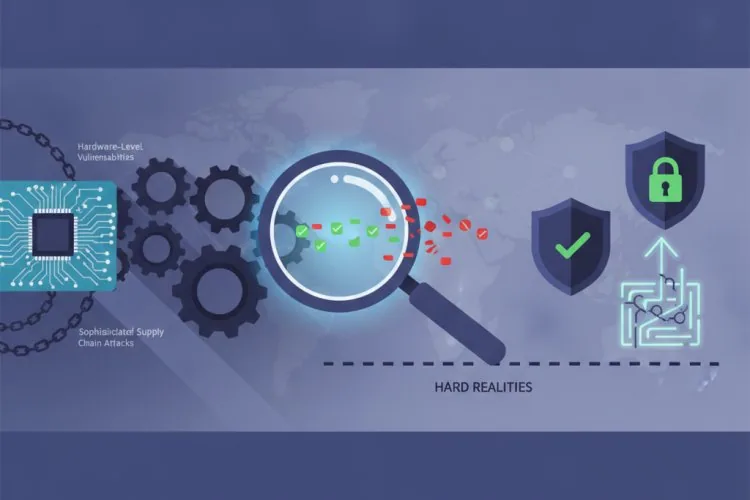

Modern software development relies heavily on open-source packages, modular code libraries, and decentralized repositories. While this ecosystem fosters incredible speed and innovation, it also introduces a massive attack surface. Recent security incidents—ranging from compromised package repository accounts to sophisticated credential-stealing backdoors injected into mainstream libraries—highlight an uncomfortable truth: our global software supply chain is under constant pressure.
Yet, when browsing vendor pitches or tech headlines, it is easy to get lost in the noise. Security tool manufacturers often oversell silver-bullet solutions, claiming that a single automated dashboard can completely eliminate third-party risk. To build resilient systems, IT decision-makers and developers need to look past the marketing hype and understand where genuine risks live, alongside practical strategies to mitigate them.
The Anatomy of Modern Supply Chain Vulnerabilities
Historically, enterprise security focused on perimeter defense—building robust firewalls to keep malicious actors outside the corporate network. Today, the perimeter has dissolved. Applications are assembled from dozens, sometimes hundreds, of external dependencies fetched from public registries like npm, PyPI, or Maven Central.
Attackers have adapted to this shift. Instead of hacking directly into a heavily defended enterprise firewall, malicious actors target upstream maintainers. By compromising a popular package or a widely used maintenance tool, attackers can slip malicious code—such as credential stealers, data exfiltration scripts, or silent backdoors—directly into downstream applications. Because these dependencies often run with high privileges inside build pipelines or production environments, the blast radius can be devastating.
Real Progress vs. Vendor Hype
When evaluating how the industry is responding to these challenges, it helps to distinguish between meaningful architectural improvements and empty marketing buzzwords.
- The Hype: "Zero-Trust Package Management." Some vendors claim their software can instantly verify the absolute safety of any open-source library using proprietary AI. In reality, static analysis and AI models cannot automatically detect novel, well-disguised backdoors without false positives or blind spots.
- The Reality: Cryptographic Verification and Provenance. Real progress is happening through standards like Software Bills of Materials (SBOMs) and cryptographic artifact signing (such as Sigstore). Knowing precisely what code is inside your build, where it came from, and whether it has been tampered with is far more valuable than an automated guarantee of safety.
- The Hype: 100% Automated Threat Remediation. The idea that automated scripts can instantly patch and update every dependency without human oversight is a recipe for broken production environments.
- The Reality: Controlled Dependency Pinning and Automated Alerts. Effective security balances automated vulnerability scanning with human-in-the-loop review, strict version pinning, and rapid-response rollback procedures.
Actionable Steps to Secure Your Software Pipeline
Securing your development pipeline does not require buying every expensive enterprise tool on the market. Instead, it demands a disciplined, layered approach to dependency management and access control.
- Implement and Maintain Comprehensive SBOMs: Generate a Software Bill of Materials for every release. You cannot protect what you cannot see, and an accurate inventory is the foundation of rapid vulnerability response.
- Enforce Strict Authentication and MFA: For internal registries and developer accounts alike, mandate hardware-backed multi-factor authentication. Many upstream compromises succeed simply because an attacker hijacked a maintainer's weakly secured account credentials.
- Pin Dependencies and Audit Updates: Avoid pulling packages dynamically using floating tags like
latest. Pin exact versions or cryptographic hashes, and thoroughly review changelogs and diffs before upgrading critical libraries. - Adopt Least-Privilege CI/CD Pipelines: Ensure your build and deployment pipelines only have access to the specific resources and secrets they need. A compromised package running during a build should not possess network access to exfiltrate unrelated environment variables or production keys.
- Monitor Upstream Ecosystem Advisories: Stay plugged into security advisories specific to your technology stack. Quick detection of a compromised package gives your team time to patch before exploits are weaponized at scale.
Moving Beyond Panic-Driven Security
It is easy to react to high-profile security disclosures with panic, rushing to adopt whichever tool promises immediate immunity. However, sustainable security is a continuous engineering discipline, not a product you purchase off the shelf.
By focusing on foundational hygiene—such as strict access controls, cryptographic provenance, precise dependency tracking, and least-privilege execution—development teams can drastically reduce their exposure without slowing down delivery velocity. Cutting through the hype allows organizations to focus resources where they actually matter: building resilient, transparent, and defensible software systems for the long term.
More about software supply chain security
Want to go further with software supply chain security? These Netstech guides and services are a good next step: