For years, the narrative surrounding smart home automation and connected hardware has pointed in a single, cloud-heavy direction. Every smart bulb, security camera, and automated thermostat was marketed as part of an ecosystem where your daily routines, voice commands, and video feeds were constantly streaming to remote server farms. In exchange for convenience, users accepted a hidden trade-off: recurring subscription fees, susceptibility to internet outages, and legitimate privacy vulnerabilities.
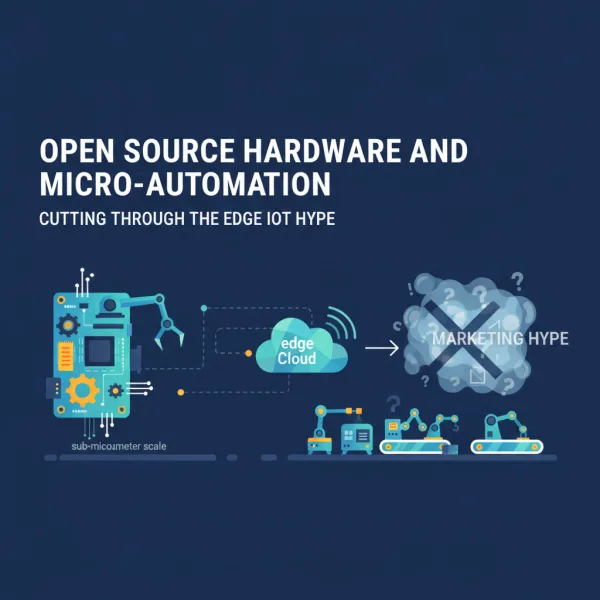
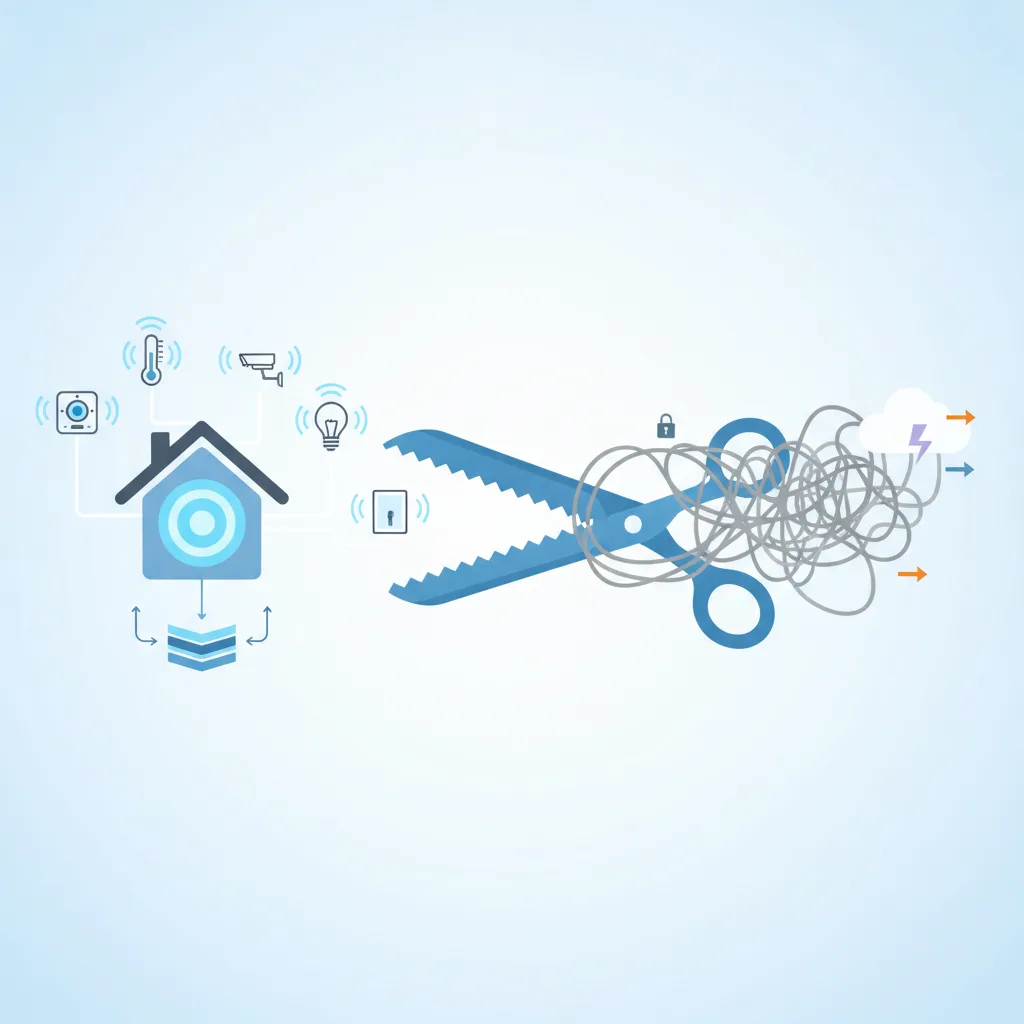
Today, a noticeable pendulum swing is underway across the Internet of Things (IoT) landscape. Engineers, privacy advocates, and tech-curious homeowners are increasingly rejecting pure cloud dependency in favor of local-first smart home architecture. But as local control platforms and edge-computing devices flood the market, it is vital to separate genuine architectural breakthroughs from clever marketing hype.
The Core Problem with Cloud-Centric Smart Homes
To understand why local-first design is gaining traction, we first need to look at why the traditional model often frustrates users. In a cloud-dependent smart home, a simple action—such as turning on a smart light switch in your living room—can trigger a surprisingly convoluted journey:
- Your physical switch sends a wireless signal to a local bridge or hub.
- That hub transmits the command over your internet router to an external cloud server (often hosted overseas).
- The cloud server authenticates the request, processes the automation rule, and sends a response back down your internet pipe.
- Your local hub receives the response and finally toggles the light bulb.
This round-trip loop introduces unnecessary latency, consumes bandwidth, and completely breaks the moment your internet service provider (ISP) experiences an outage. More critically, it exposes sensitive telemetry and video data to third-party servers, creating compliance and privacy risks that many households and businesses prefer to avoid.
What Is "Local-First" Architecture in IoT?
A local-first smart home architecture flips the traditional model on its head. In this paradigm, core automation engines, voice recognition models, data logging, and device integrations execute entirely within your local area network (LAN). Your hardware talks directly to a local hub—whether running on dedicated micro-hardware or a local server—without requiring an active connection to the outside world.
Crucially, local-first does not mean isolated. Devices can still access external weather APIs, send remote notifications via secure encrypted tunnels, or download software updates when needed. The defining characteristic is operational autonomy: if your internet cuts out completely, your automated routines, automations, sensors, and interior security loops continue to function seamlessly.
Separating Reality from Hype: What Is Actually New?
It is easy for manufacturers to slap terms like "edge-enabled" or "locally processed" onto standard hardware packaging. When evaluating connected devices today, it helps to distinguish substantive technical capabilities from marketing buzzwords.
1. Real Progress: Micro-Silicon and Local AI Inference
What is genuinely new in the IoT space is the maturation of low-power, high-efficiency silicon capable of running compact machine learning models directly on edge devices. We are seeing dedicated neural processing units (NPUs) built into security cameras and home gateways. These chips can execute local object detection—distinguishing a person from a passing pet—without streaming raw video feeds to the cloud. This provides tangible privacy enhancements that were computationally impossible a few years ago.
2. The Hype: "Local-Only" Ecosystem Lock-In
Some hardware vendors market their closed ecosystems as "local" because they do not require an active cloud connection to a third-party server. However, if that local control is restricted entirely to a proprietary mobile app that refuses to communicate with open standards or other manufacturers, it is not true open local-first architecture—it is simply local walled-garden confinement. True local architectures prioritize interoperability standards like Matter, Zigbee, Z-Wave, and open-source automation platforms.
Key Benefits of Transitioning to Local-First Connected Hardware
Adopting a local-first strategy offers measurable operational advantages for both residential setups and light commercial deployments:
- Sub-Millisecond Latency: Because commands execute locally over Wi-Fi, Ethernet, Zigbee, or Thread meshes, response times are instantaneous, eliminating the frustrating lag common in cloud voice assistants.
- Resilience Against Outages: Local automations, door locks, sensors, and safety routines remain fully operational during internet outages or server disruptions.
- Enhanced Privacy and Security: Sensitive data—especially audio and video feeds—remains inside your physical perimeter, vastly reducing your attack surface and exposure to enterprise cloud breaches.
- Elimination of Cloud Subscription Fatigue: By processing data locally, you avoid mandatory monthly fees charged by manufacturers just to store video clips or access advanced automation features.
Checklist for Evaluating Local-First Smart Devices
Before purchasing connected hardware for a local-first deployment, use this practical checklist to separate well-engineered products from cloud-tethered traps:
- Local API Availability: Does the device offer a documented local API or native integration with open-source smart home platforms?
- Cloud-Optional Operation: Can the device be fully configured, updated, and operated without creating an online vendor account?
- Standard Protocols: Does it support open ecosystem standards like Matter, Zigbee, or Thread rather than relying solely on proprietary Wi-Fi apps?
- Local Data Storage: For cameras and sensors, can event logs and media files be saved to local storage (such as a local NVR or microSD card) rather than forced cloud storage?
The Future of Edge-Driven Smart Environments
The evolution toward local-first smart home architecture represents a broader maturity curve across the technology sector. Just as developers are rediscovering the benefits of local computing models and smaller models, the IoT industry is realizing that centralized cloud architectures are inefficient and fragile for physical spaces.
By investing in hardware that respects local autonomy, users and IT professionals can build connected environments that are faster, more private, and infinitely more reliable. As edge silicon continues to advance, the boundary between cloud convenience and local control will continue to blur—putting ownership and security back where it belongs: in your own hands.