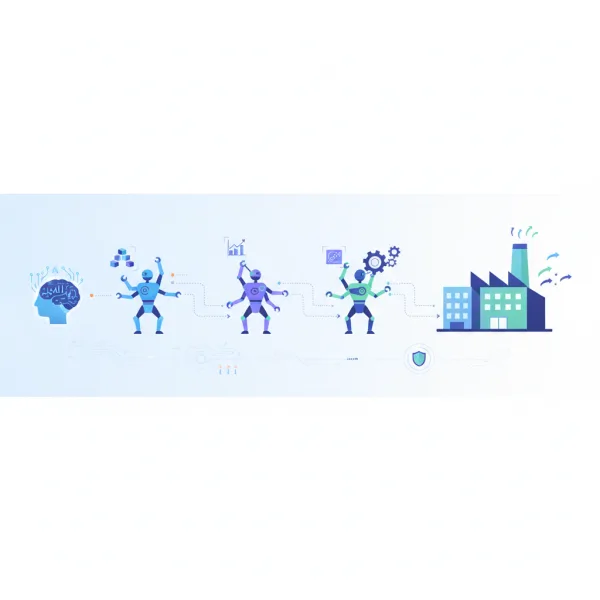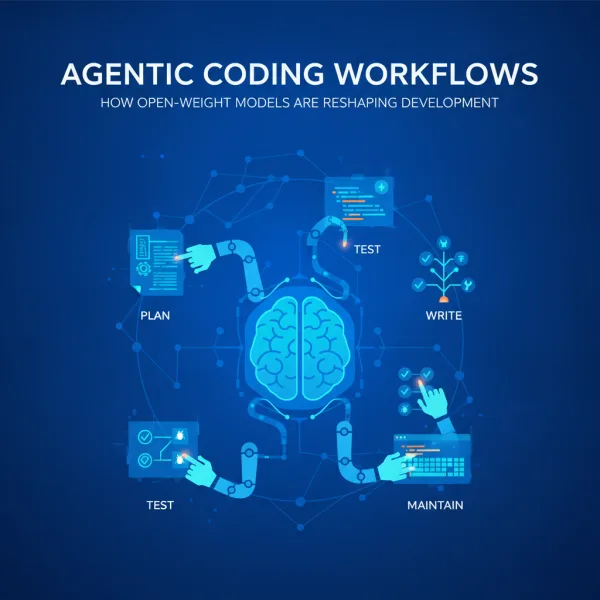
For the past several years, the paradigm of artificial intelligence has remained fundamentally static during execution. Whether you are running a massive closed-source model or fine-tuning an open-weight architecture on your local cluster, the inference pipeline is predictable: prompt enters, weights remain frozen, and tokens exit. While prompt engineering, retrieval-augmented generation (RAG), and agentic orchestration loops have added layers of dynamic behavior *around* the model, the core neural network itself stays fixed until the next training or fine-tuning cycle. Self-modifying AI models aim to change that.
That rigid boundary between training and inference is beginning to blur. Recent technical explorations and community proofs-of-concept around language models dynamically rewriting their own internal weights represent a fascinating leap in machine learning research. While still largely experimental, the capability of an AI agent to adjust its own parameters on the fly during a complex workflow shifts our understanding of what automation tools can achieve. How does this capability change the landscape of workflow automation, and what does it mean for IT professionals and developers looking toward the future of adaptive systems?
Understanding Self-Modifying AI Models: Beyond Static Weights
To understand the significance of self-modifying AI models, we have to look at how traditional automation handles unexpected edge cases. Standard workflow automation relies on deterministic scripts or rigid branching logic. If an automated pipeline encounters an input it wasn't programmed to handle, it typically throws an exception, halts, or falls back to a generic default response.
Agentic workflows introduced a step up by letting autonomous loops use tools, reflect on errors, and retry steps. Yet, those agents are still constrained by the fixed capabilities of the underlying model weights. If a model lacks a specific nuanced capability or struggles with a newly introduced domain-specific syntax, it must rely on external scaffolding—like code interpreters or extensive prompt instructions—to bridge the gap.
Self-modifying AI models introduce a recursive mechanism where the system can inspect its own performance metrics, generate targeted weight adjustments, and apply those updates directly to its parameter space. Instead of just writing external code to solve a problem, the model adapts its internal representation to become a better tool for that specific task.
The Impact of Self-Modifying AI Models on Workflow Automation
When an AI agent can dynamically alter its internal configuration, the nature of workflow automation shifts from static orchestration to evolutionary adaptation. Here is how this capability alters the way complex tasks are handled:
-
Hyper-Specialized Micro-Adaptation: Rather than maintaining dozens of heavily prompted specialized agents, an orchestrator could dynamically spawn and tune lightweight sub-models optimized for narrow enterprise sub-tasks on demand.
Autonomous Error Correction: If an automated data-processing pipeline consistently fails at parsing a novel file format, a self-modifying agent could analyze the failure, compute a gradient update or parameter shift, and instantly improve its parsing accuracy without human intervention.
Reduced Prompt Bloat: As models gain the ability to internalize persistent operational feedback directly into their weights, developers no longer need to stuff thousands of tokens of contextual instructions into every single API call.
This shift promises to make automation systems far more resilient against "drift"—the gradual degradation of system performance when business logic or external data schemas change over time.
Challenges and Risks in Production Environments
While the prospect of software that rewrites its own brain sounds like science fiction made reality, it introduces massive engineering and governance challenges. Bringing self-modifying AI models into enterprise environments requires addressing several hard realities:
- Catastrophic Forgetting: When a model modifies its own weights to solve an immediate, localized problem, it runs the risk of degrading its general capabilities across other domains. Ensuring stability is a major hurdle.
- Auditability and Compliance: In regulated industries like finance and healthcare, every automated decision must be traceable. If an AI system changes its own internal weights mid-workflow, reproducing the exact state that led to a specific decision becomes exponentially more difficult.
- Security Vulnerabilities: Malicious actors could potentially craft prompt injection attacks designed not just to trick the model's output, but to manipulate its self-modification routines, leading to unauthorized persistent changes in behavior.
- Compute Overhead: Calculating and applying weight updates in real-time demands substantial computational resources, shifting bottlenecks from network latency to local GPU memory bandwidth and optimization costs.
Preparing for the Next Wave of Adaptive Architecture
We are still in the early exploratory phases of self-modifying architectures. Just as software development evolved from hardcoded monolithic scripts to dynamic cloud-native microservices, AI automation is steadily progressing toward decentralized, self-healing, and self-optimizing loops.
For IT leaders and developers, the key is keeping a close eye on these research trajectories without prematurely exposing production systems to unvetted dynamic architectures. Understanding how open-weight models, reinforcement learning from feedback, and local parameter updates intersect will define the next generation of enterprise automation strategy.
As autonomous systems grow increasingly capable of rewriting the rules they operate by, the human role will pivot away from writing rigid automation scripts and toward defining the strict ethical, safety, and operational guardrails within which these adaptive models are allowed to evolve.
Related guides
- Agentic workflow automation: how AI agents are transforming enterprise productivity
- AI continual learning: overcoming catastrophic forgetting in enterprise LLMs
- Open weights vs. closed AI: cutting through the enterprise hype
- Agentic AI and automation services
For a general overview, see the Wikipedia article on self-modifying code.