Every year brings a fresh wave of "next big thing" headlines, but 2026 feels different. The technologies below aren't speculative lab experiments anymore — they're already reshaping how businesses operate, how software gets built, and how people interact with the digital world. Here's a look at the trends actually moving the needle right now.
1. Artificial Intelligence Moves From Chatbots to Agents
The first wave of generative AI was about answering questions. The current wave is about getting things done. AI agents can now plan multi-step tasks, call external tools and APIs, and carry out workflows with minimal human supervision — from triaging support tickets to writing and testing code. Businesses that once used AI purely for content generation are now embedding autonomous agents directly into their operations, and the gap between "AI as an assistant" and "AI as a coworker" keeps narrowing.
2. Cloud Computing Gets Smarter, Not Just Bigger
Cloud adoption is no longer a differentiator — it's the default. What's changed is the sophistication: serverless architectures, edge-integrated cloud regions, and cost-aware auto-scaling now let companies of any size run infrastructure that once required a dedicated ops team. Multi-cloud and hybrid-cloud strategies have also become mainstream, driven by a mix of cost optimization, data residency rules, and a desire to avoid vendor lock-in.
3. Cybersecurity Becomes a Board-Level Priority
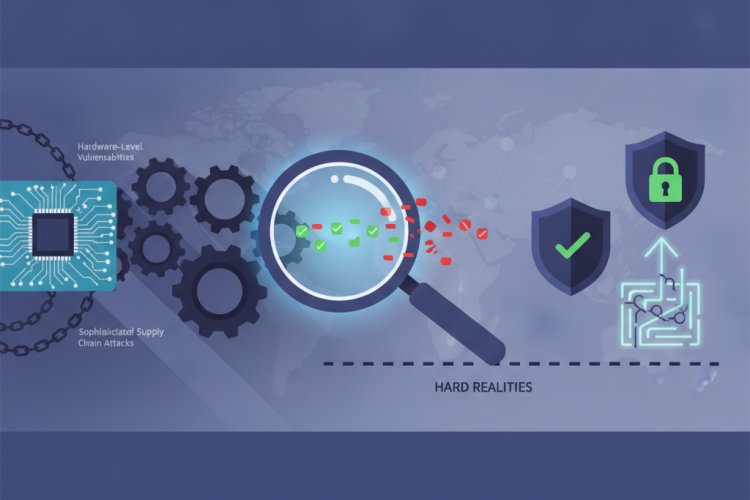
As attack surfaces grow — more APIs, more third-party integrations, more AI-generated code — security can no longer be an afterthought bolted on at the end of a project. Zero-trust architecture, continuous vulnerability scanning, and AI-assisted threat detection are becoming baseline expectations rather than premium add-ons. Automated tools are increasingly used on both sides: defenders use AI to spot anomalies faster, while attackers use it to scale reconnaissance and phishing. The result is an arms race that rewards organizations who bake security into their development lifecycle from day one, not after an incident.
4. Quantum Computing Inches Toward Practical Use
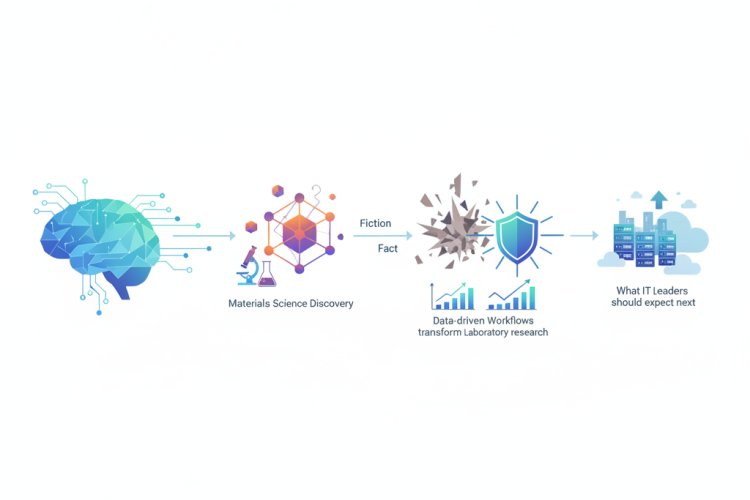
Quantum computers are still far from replacing classical machines for everyday tasks, but 2026 has seen real progress in error correction and qubit stability. Early practical applications are emerging in drug discovery, materials science, and complex logistics optimization — areas where classical computers hit a wall. Most businesses don't need to invest in quantum today, but understanding where it's headed is becoming part of any serious long-term technology strategy.
5. Web3 and Decentralized Infrastructure Find Real Use Cases
Past the hype cycles, blockchain-based infrastructure is settling into a smaller set of use cases where decentralization genuinely adds value: supply chain verification, digital identity, and transparent financial settlement. Rather than promising to replace the entire internet, Web3 technologies are increasingly being adopted as a complementary layer — solving specific trust and verification problems that centralized systems struggle with.
6. Edge Computing Powers the Next Generation of Real-Time Apps
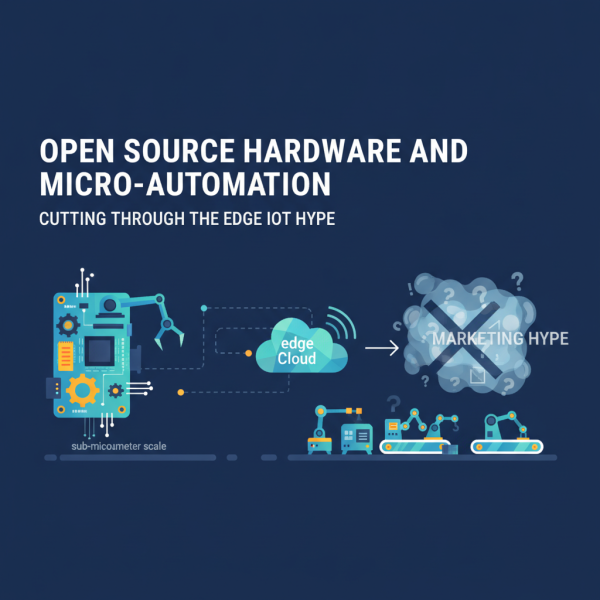
As IoT devices, smart sensors, and connected hardware multiply, sending every byte of data to a centralized cloud for processing is no longer fast enough — or cost-effective. Edge computing pushes processing closer to where data is generated, cutting latency for use cases like autonomous systems, industrial automation, and real-time analytics. Combined with 5G rollouts, it's unlocking applications that simply weren't feasible a few years ago.
What This Means Going Forward
None of these trends exist in isolation — they reinforce each other. AI agents need cloud infrastructure to run at scale; edge computing needs strong security to protect distributed data; cloud providers are racing to offer quantum-as-a-service. Businesses that treat these as connected pieces of a broader technology strategy, rather than isolated buzzwords to chase individually, will be the ones best positioned for what comes next.
The common thread across all of them: technology is shifting from something companies use to something that actively works alongside them. Staying ahead means less about adopting every new tool, and more about understanding which of these shifts genuinely fits your business's problems.