For years, the promise of the Internet of Things (IoT) followed a predictable, cloud-centric playbook: a remote sensor gathers data, streams it across a wide-area network to a massive cloud data center, heavy analytical models chew on the payload, and a command eventually trickles back down to the hardware. While this centralized paradigm successfully birthed the modern smart home and industrial monitoring systems, it has increasingly hit a technological wall. Bandwidth costs, network latency, privacy vulnerabilities, and sheer connectivity dropouts have exposed the limits of tethered intelligence.
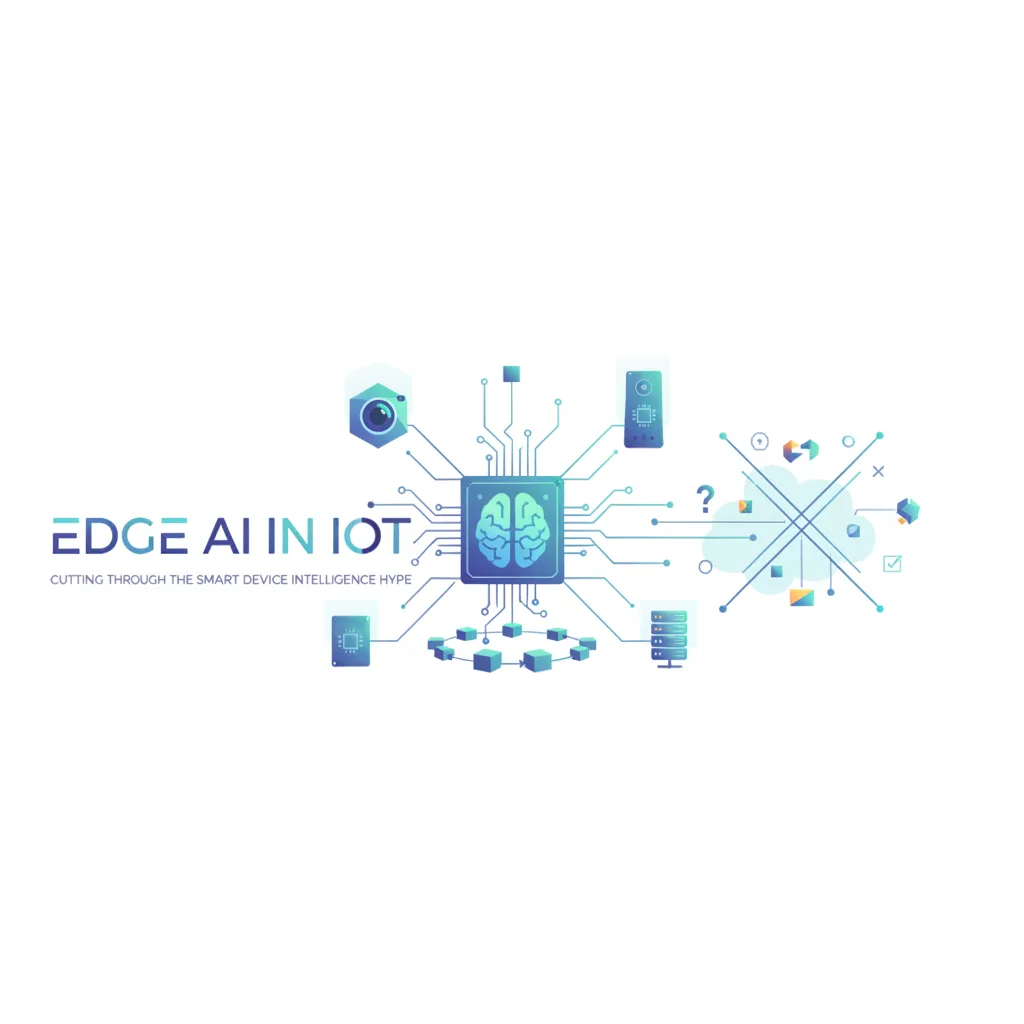
Enter Edge AI—the convergence of embedded machine learning and connected hardware. By shifting neural network inference away from distant server farms and directly onto local microcontrollers, edge devices, and gateways, engineers are rewriting how smart systems operate. Yet, much like every major technological shift, the landscape is heavily clouded by marketing buzzwords. Discerning what local intelligence can genuinely achieve versus what remains a futuristic pitch is critical for IT decision-makers and developers building tomorrow's infrastructure.
Understanding Edge AI: Beyond the Buzzword
At its core, Edge AI refers to running machine learning models locally on a piece of hardware without requiring a continuous, real-time connection to the cloud. Instead of sending raw high-definition video streams, continuous audio feeds, or massive telemetry logs over cellular or Wi-Fi networks, the device processes the data right at the point of capture.
The distinction between traditional embedded systems and Edge AI comes down to adaptability and pattern recognition. A traditional thermostat follows hardcoded threshold rules: if temperature X hits threshold Y, trigger relay Z. An Edge AI-powered climate control system, conversely, analyzes occupancy patterns, thermal inertia, weather forecasts, and historical preferences locally to optimize energy efficiency dynamically, adapting to changing environments without human reprogramming.
However, running neural networks on power-constrained hardware is no small feat. It requires sophisticated model compression techniques, quantization, and specialized hardware accelerators like NPUs (Neural Processing Units) embedded directly into silicon. Recognizing these architectural realities helps separate legitimate engineering feats from inflated marketing claims.
Real-World IoT Use Cases Where Edge AI Shines
The true value of local intelligence becomes apparent in scenarios where cloud connectivity is either too slow, too expensive, or too risky.
- Industrial Predictive Maintenance: Heavy manufacturing plants deploy vibration and acoustic sensors on high-speed turbines. Edge AI models analyze acoustic signatures locally in real time, detecting micro-fractures or bearing wear instantly. Shutting down a compromised motor within milliseconds prevents catastrophic equipment failure, whereas cloud-latency could result in seconds of delayed reaction—the difference between a minor fix and a million-dollar disaster.
- Privacy-First Smart Surveillance: Consumer and enterprise security cameras often face severe privacy backlashes regarding cloud-stored video feeds. Edge AI enables on-device computer vision that processes pixel data locally to detect anomalies or intruders while discarding non-relevant video streams immediately. Faces and personal data never leave the local hardware, mitigating massive compliance and privacy risks.
- Autonomous Agriculture and Remote Monitoring: Remote crop-monitoring nodes deployed across vast agricultural fields operate under sporadic cellular coverage. Local edge models running on low-power solar nodes can classify crop health, identify pest infestations, and trigger automated localized irrigation adjustments autonomously for months without needing a reliable internet link.
Cutting Through the Hype: What Edge AI Cannot (Yet) Do
While the architectural benefits are compelling, hype cycles often misrepresent the current capabilities of local silicon. A sober look at the limitations prevents costly implementation missteps:
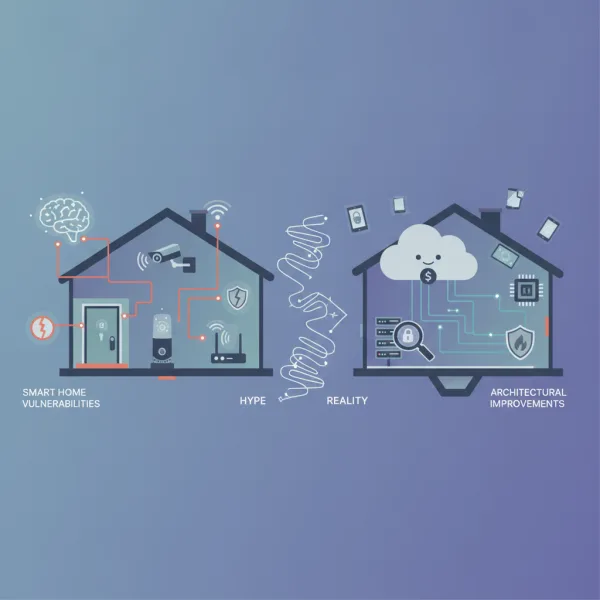
Hype: "Every IoT device will run massive, human-like general intelligence locally."
Reality: Physics and thermodynamics dictate otherwise. Running a trillion-parameter foundation model locally on a battery-powered sensor is fundamentally constrained by power consumption and thermal dissipation. Edge AI models are domain-specific, highly optimized, and compact. They excel at narrow, high-frequency classification and anomaly detection tasks, not open-ended general reasoning.
Hype: "Edge AI eliminates the cloud entirely."
Reality: While edge devices handle real-time inference autonomously, the cloud remains vital for training, aggregation, and fleet management. Heavy model training still requires high-performance cloud clusters. Once trained, those updated weights are pushed down to the edge fleet in a continuous hybrid feedback loop.
Evaluating Your Next IoT Architecture: A Practical Checklist
Before committing engineering resources to an Edge AI deployment, technical leads should evaluate their project against a structured checklist to ensure local processing is truly justified:
- Latency Sensitivity: Does your application require response times under 50 milliseconds where network jitter could cause safety hazards or operational failure? If yes, edge processing is mandatory.
- Bandwidth Economics: Are you streaming continuous high-bandwidth data like video or dense telemetry over expensive cellular networks? Calculate the cost of data transmission versus the capital expenditure of upgrading to edge-capable hardware.
- Data Privacy and Compliance: Does the captured data fall under strict regulatory frameworks (such as GDPR, HIPAA, or industrial security standards) that make cloud storage legally or ethically untenable?
- Connectivity Resilience: Can the device tolerate intermittent or total loss of internet connectivity while maintaining core operational safety?
- Power and Thermal Budgets: Does your target hardware enclosure support the thermal dissipation and power draw required to run local neural network accelerators?
The Future of Connected Hardware Intelligence
The evolution of connected hardware is rapidly shifting from reactive data-gathering nodes to proactive, autonomous agents operating at the physical edge. As silicon manufacturers continue to shrink NPU footprints and squeeze higher performance-per-watt ratios out of embedded chips, local intelligence will become the default standard rather than a premium feature.
For developers and IT decision-makers, navigating this transition requires looking past flashy product pitches and focusing on core architectural fundamentals. By matching the right workloads to the right tier of compute—keeping high-speed decisions at the edge and heavy aggregation in the cloud—organizations can build resilient, secure, and genuinely smart IoT systems that stand the test of time.