Introduction:
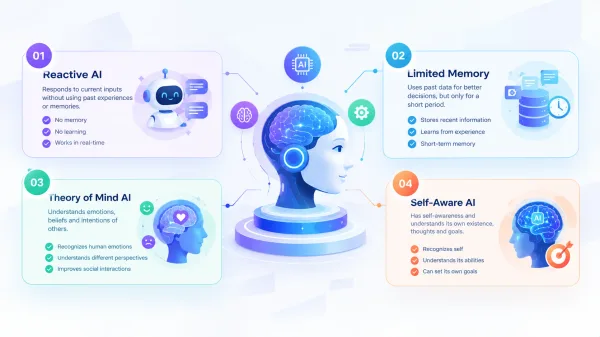
The reactive machine only carried out the basic process. The reactive machine is the most basic type of artificial intelligence. It provides production in answer to a specific input. A simple, reactive machine is unique that profits a humanoid face as contribution or input and outputs a rectangle around it to distinguish it as a face. Because of no memory, this doesn’t save any data and does not learn anything.
Static machine learning methods are responsive machines. They have the simplest idea and may be found on GitHub repositories all over the internet. Downloading, trading, passing around, and importing these models into a developer's toolkit are a breeze.
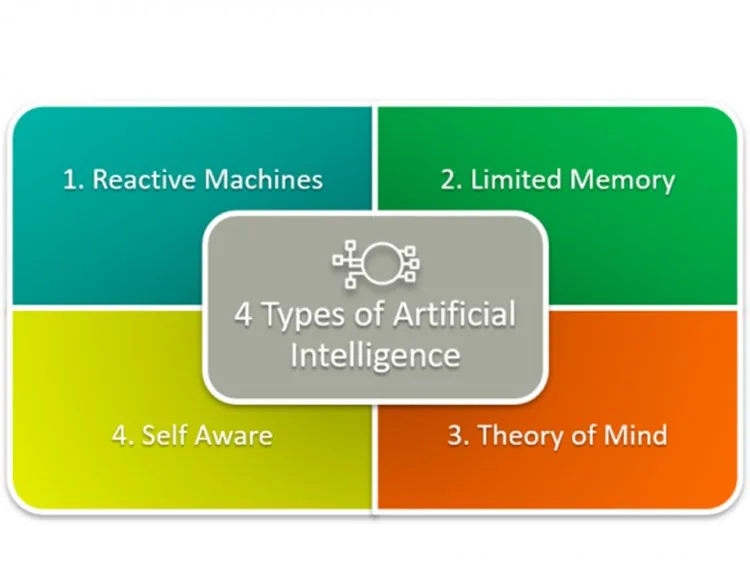
What is the reactive machine?
This is the very basic type of AI on the basis of functionalities. It has limited capabilities. It is completely relational. This won't have the ability to memorize the past experience as it is not able to predict the results or outcomes based on the past experience.it only works on the present data and reacts according to that data. Reactive AI devices are unable to draw conclusions from data in order to assess their future actions. The specific input has given the output always will be the same. They can only do a limited number of pre-defined jobs.
How do reactive machines work?
Reactive AI works as anticipated, producing anticipated results based on the material it gets. These reactive devices will continuously react in the same way to similar events. Reactive machines can't learn or imagine the past or the future.
What is the example of reactive AI?
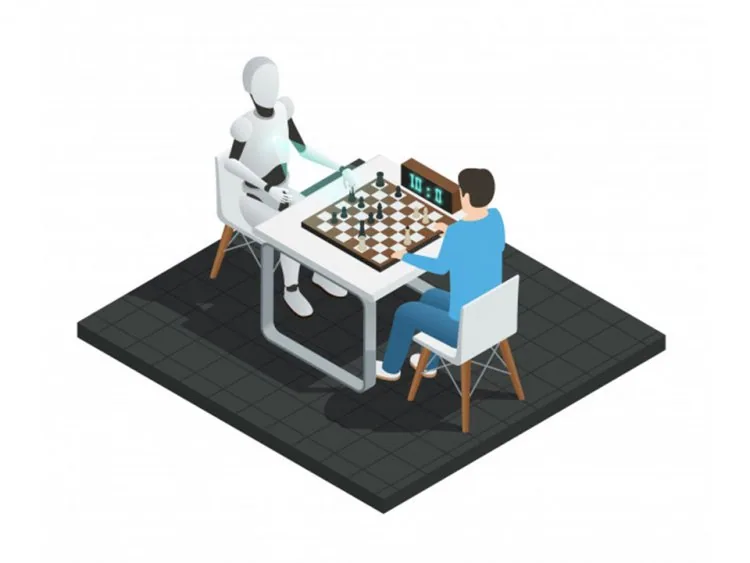
The renowned IBM Chess software that defeated world champion Garry Kasparov is an example of Reactive AI.
Deep Blue can recognize all of the portions on a chess panel and appreciate how they move. It is accomplished of predicting what actions it and its opponent will make then. It can also determine the best course of action from a variety of options.
It, on the other hand, has no intelligence of the past and no recall of what has happened before. Deep Blue ignores everything before the present instant, with the exception of a seldom utilized chess-specific restriction forbidding repeating the same move three times. All it does is examine the pieces on the chessboard as they currently stand and select one of several probable future moves.[1]
What are some characteristics of reactive AI?
- It is good for the simple recognition of the patterns and the simple classification.
- It is also great in the situation where all parameters are known.
- It can beat humans because it can make calculations much faster.
- It has no capability of dealing with situations where past experience is required.
- Understanding the Four Types of Artificial Intelligence. November 14, 2016; Available from: https://www.govtech.com/computing/understanding-the-four-types-of-artificial-intelligence.html.
Reactive machine examples
Reactive machines are rare in modern products because most AI now learns from data, but the idea is still useful. Common examples include:
- Deep Blue, the IBM chess computer that beat world champion Garry Kasparov in 1997. It evaluated the current board position and picked the best move using fixed rules and search.
- Simple game AI in arcade and puzzle games, where an opponent responds to the player's current position.
- Rule-based filters, such as a basic spam filter that blocks emails with certain words and does not learn from new examples.
- Basic recommendation rules, such as "show products from the same category".
Reactive machine vs limited memory AI
A reactive machine only looks at the present input and never stores past experience. Limited memory AI also looks at recent data, such as the last few seconds of road conditions for a self-driving car, and is trained on past examples. Learn more in limited memory AI or see all four types of AI.
Quick answers
What is a reactive machine in simple words?
It is an AI that reacts to what it sees right now, with no memory of the past and no ability to learn from it.
Is reactive AI still used today?
Yes, in simple systems where predictable behaviour matters more than learning, such as rule-based controllers and basic game opponents.
What are the limitations of reactive machines?
They cannot learn from experience, improve over time or handle situations outside their rules.