For over a decade, cloud cost optimization followed a predictable rhythm. You provisioned virtual machines, scaled containers up and down based on traffic spikes, and turned off non-production environments over the weekend. Cloud architecture was largely reactive—triggered by human requests, scheduled cron jobs, or predictable web traffic patterns. Today, that operational model is experiencing a seismic shift.
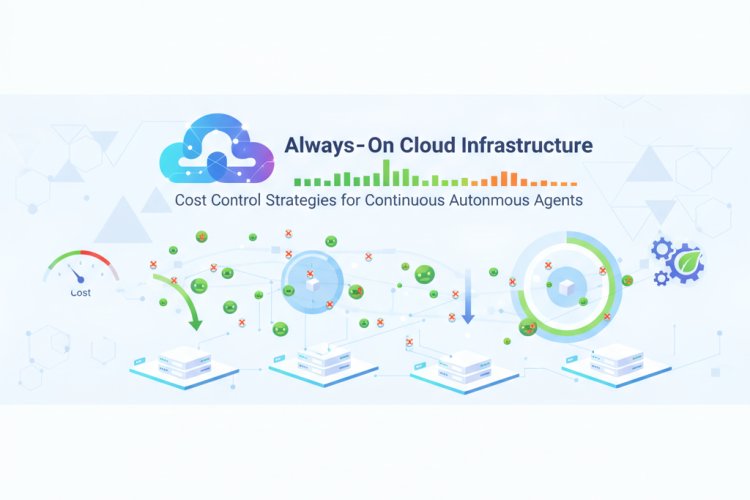
With the rapid mainstream adoption of autonomous, always-on AI agents and micro-decision loops embedded directly into backend systems, cloud workloads are no longer static. They are continuous, dynamic, and largely self-directed. While these persistent agents unlock unprecedented productivity and real-time responsiveness, they introduce a massive architectural challenge: unpredictable, runaway compute bills.
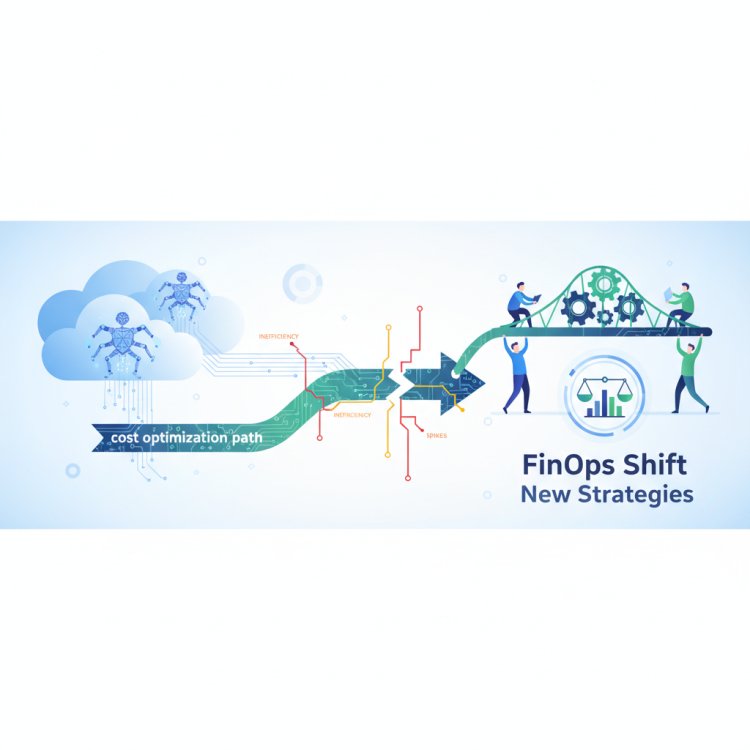
If your organization is scaling up autonomous systems, your traditional FinOps playbook is likely already out of date. Here is a look at why always-on cloud agents change the economics of infrastructure, and how modern engineering teams are adapting their cost-optimization strategies to keep pace.
The Economics of the Always-On Cloud Agent
Traditional cloud billing assumes a baseline of idle time. Servers sit quietly waiting for a user query or an API call. Even serverless functions, which bill down to the millisecond, only execute when explicitly invoked by an upstream event.
Always-on agents break this assumption. By design, these autonomous workflows continuously poll, reason, check state, evaluate background conditions, and communicate with other services. They are persistent loops running quietly in the background of your Kubernetes clusters or serverless orchestrators.
The financial impact of this shift is multifaceted:
- Continuous Inference Costs: Unlike deterministic code, which executes cheaply, agents frequently call large language models or specialized local models for reasoning steps, accumulating tokens around the clock.
- Data Ingress and Egress Multipliers: Autonomous agents often scrape APIs, query vector databases, and pull external data context continuously, driving up hidden networking costs.
- State Management Overhead: Maintaining the short-term and long-term memory of an active agent requires high-throughput caching and database operations that rarely sleep.
When you multiply these factors across dozens—or hundreds—of concurrent micro-agents performing automated tasks across your infrastructure, monthly cloud bills can spiral rapidly before anomaly detection systems even notice.
Architectural Patterns for Cost-Aware Autonomous Systems
To prevent autonomous workloads from draining operational budgets, engineering teams are rethinking how agents are structured at the architectural level. Cost control can no longer be bolted on after the fact by finance teams reviewing monthly invoices; it must be engineered directly into the agent lifecycle.
1. Tiered Intelligence Routing
Not every decision an agent makes requires high-end, frontier-level intelligence. Smart architectures use a tiered approach:
- Route routine, deterministic checks to local, sub-billion parameter models or traditional deterministic code.
- Reserve heavy, expensive frontier model calls exclusively for complex reasoning tasks or high-stakes edge cases.
- Implement heuristic short-circuits that allow agents to skip expensive model evaluations if a simple rule-based evaluation yields the same operational state.
2. Bounded Autonomous Loops
An agent left without strict operational boundaries can easily enter recursive reasoning loops or overly aggressive polling cycles. Modern patterns introduce hard circuit breakers:
- Set maximum iteration caps per task execution path.
- Introduce mandatory cool-down periods or adaptive backoff timers for background polling agents.
- Define explicit budget tokens per agent session, forcing the agent to terminate or request human approval if token consumption exceeds a predefined threshold.
A Practical FinOps Checklist for Agent-Driven Infrastructure
Adapting your cloud strategy to the era of autonomous workloads requires a collaborative effort between developers, platform engineers, and finance teams. Use this practical checklist to audit and optimize your agent-heavy cloud environments:
- Isolate Agent Workloads: Assign dedicated namespaces, tags, and cloud resource groups specifically for autonomous agent infrastructure to ensure granular cost attribution.
- Implement Real-Time Cost Metering: Move away from monthly bill analysis. Implement token-level and execution-time metrics dashboards that give engineering teams immediate visibility into what their agents are spending hourly.
- Right-Size Inference Infrastructure: Evaluate whether running specialized local models on reserved GPU instances or leveraging optimized managed inference endpoints yields a better price-to-performance ratio for your specific agent volume.
- Review Caching Layers: Ensure your agents aggressively cache repeated prompts, database queries, and context vectors to minimize redundant external API calls and model tokens.
- Establish Autonomous Budget Policies: Set up automated alert triggers and automated shutdown scripts that halt non-critical agent loops if spending anomalies or unexpected recursion loops are detected.
Looking Ahead
The transition toward always-on, intelligent infrastructure represents one of the most exciting leaps in modern software engineering. However, the success of these systems will ultimately be measured not just by how smartly they operate, but by how sustainably they run.
By treating cost management as an active architectural constraint rather than a passive accounting exercise, engineering teams can harness the immense power of autonomous agents without sacrificing their bottom line. The future of cloud computing belongs to those who build intelligence that is both powerful and economically disciplined.